
The complete guide
Choosing a Locking Cash Box for Small Takings
Give small takings a proper place
A few coins on a table can become a muddle once people start paying. Notes mix with receipts, change ends up in pockets, and the person serving has to stop to count what is left. A small cash box gives those items a shared home.
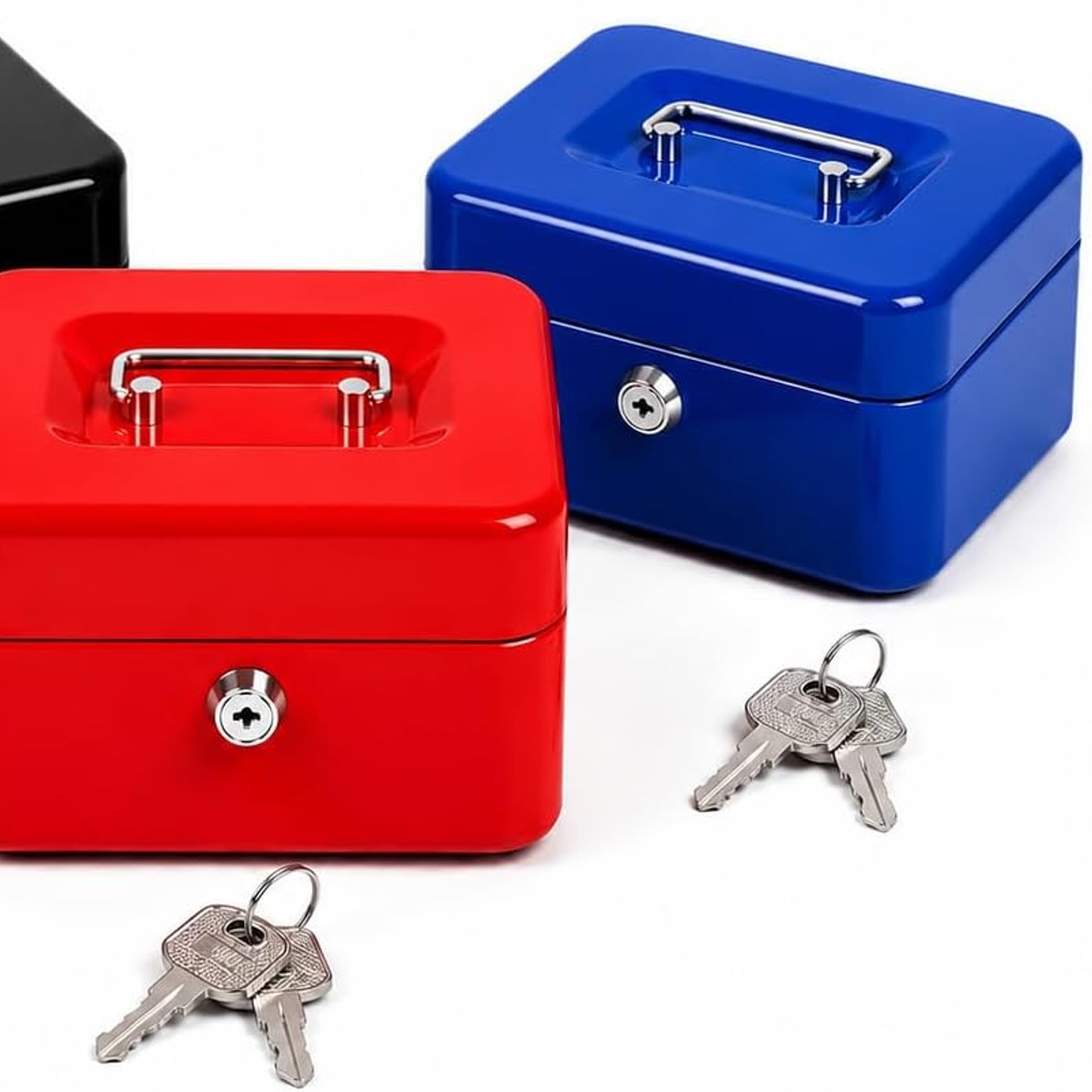
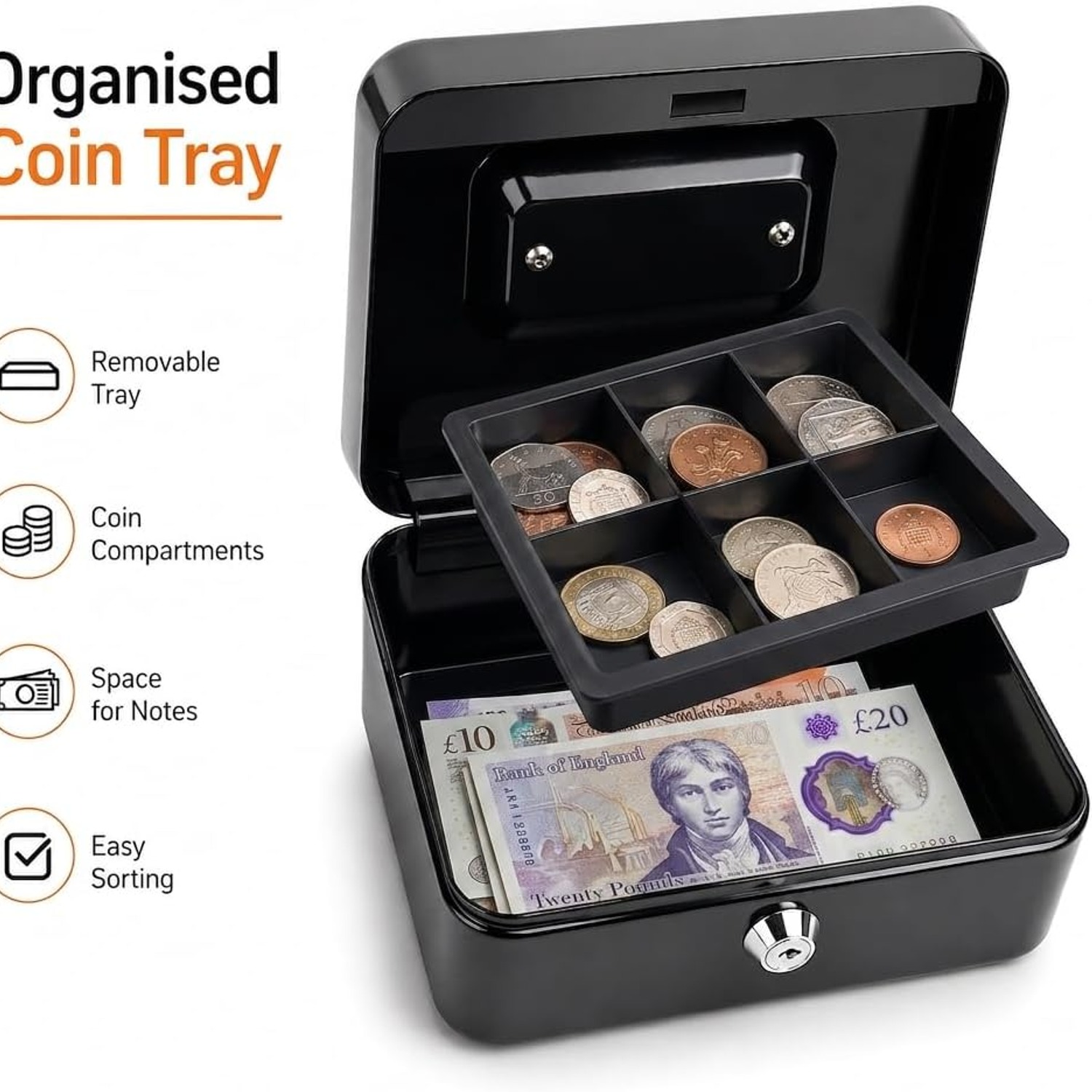
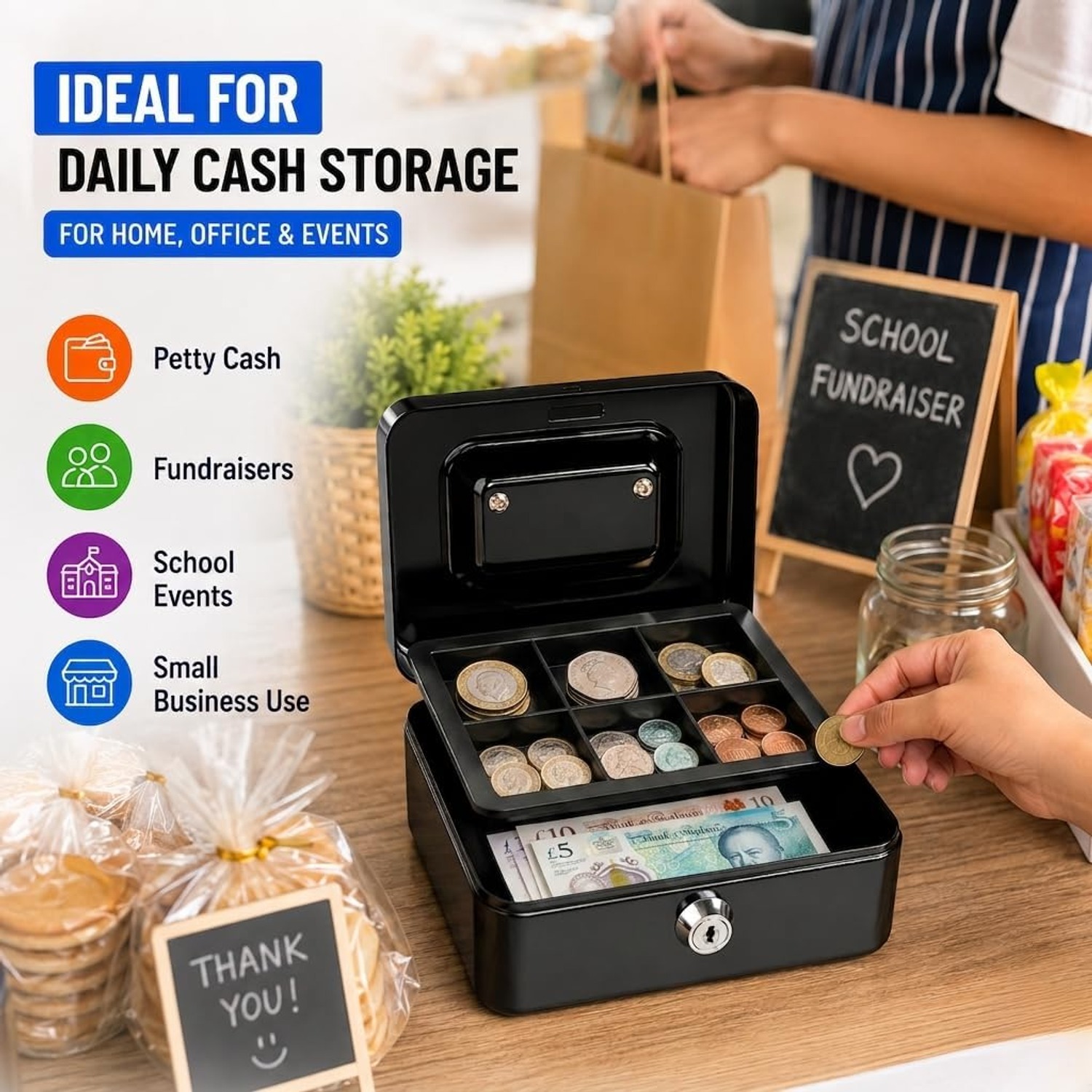
This locking cash box is built around a simple setup. It has a key lock, a removable five-compartment tray and space underneath for items that fit. A folding handle lets you carry it to your cash-handling spot, then fold the handle down.
It is a practical option for modest cash jobs, from an office float to a school fundraiser. The important part is matching its compact size and basic locking function to what you need. It is an organiser with a lock, not a replacement for a rated safe.
How the tray helps during a busy spell
The tray is the part you will use most while taking payments. Its five compartments let you give different coins or cash items their own place. That can make it easier to see what change you have without searching through one mixed pile.
Choose a layout before the first payment arrives. Put the coins you expect to use often where they are easy to reach. If several people will share the cash point, explain the arrangement so everyone puts change back in the same place.
There are more than five coin denominations in many currencies, so think about which ones matter most for your prices. A coin organiser box works better when its layout reflects the payments you actually expect. It does not need to hold every denomination in its own compartment to be useful.
Make sensible use of the space below
Lift out the tray and you can reach the lower storage area. This gives you another place for rolled coins, cheques or small supplies, provided they fit. It also lets you separate items needed for occasional use from the change you reach for often.
Keep that lower section simple. A thick stack of papers or too many loose items may stop the tray from sitting correctly. Before an event, load the box as you plan to use it and check that the tray rests properly and the lid closes without pressure.
Do not assume the lower section will hold full-size documents or unfolded notes from every currency. Usable internal measurements are not given by the maker. If paper storage is a main reason for buying, confirm fit rather than judging from the outside size alone.
Understand what the key lock offers
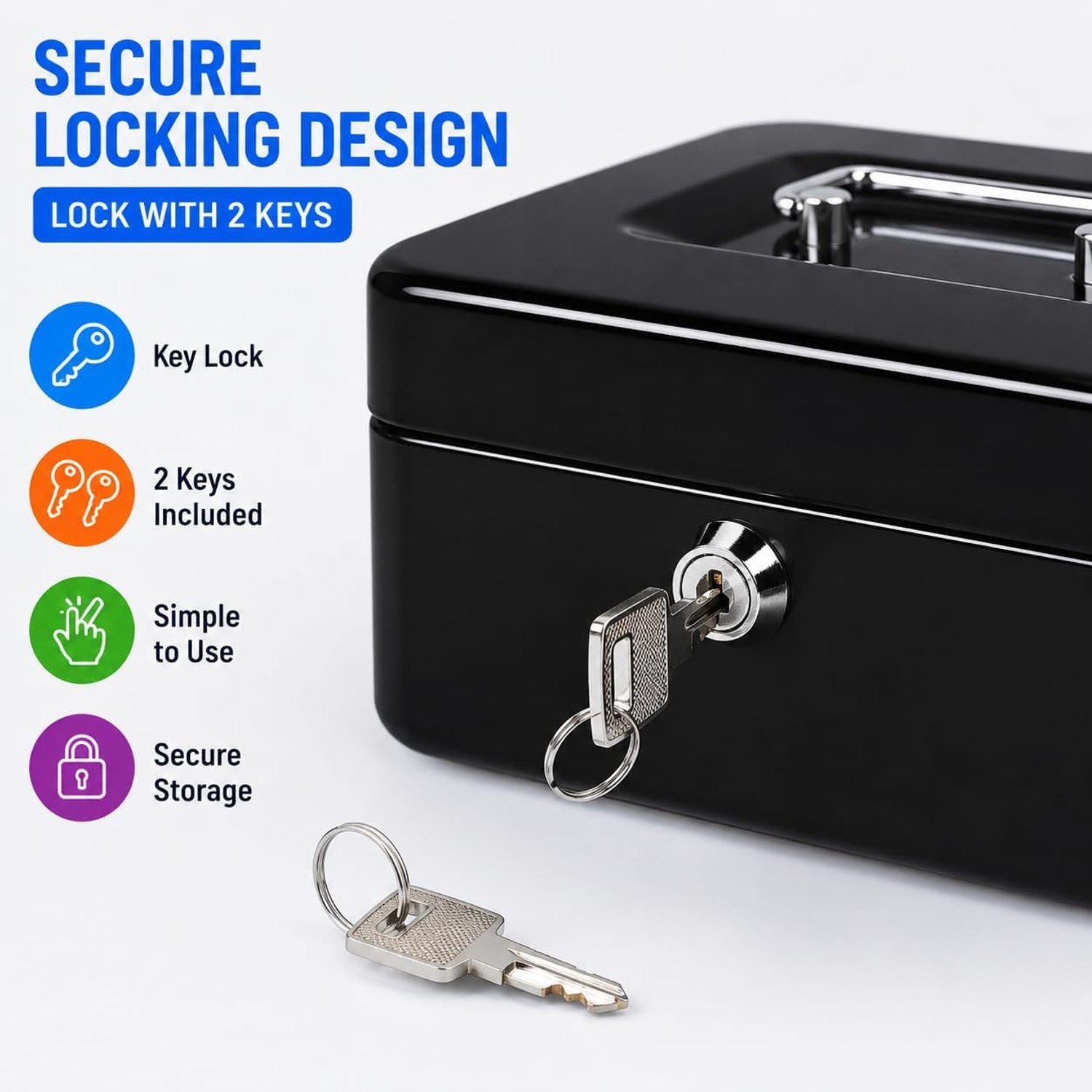
A money box with key access is straightforward to use. There is no code to set and no powered reader to maintain. This model comes with two keys, which gives you a spare to keep separately.
That spare only helps if it is somewhere other than inside the locked box. Choose a sensible storage place and decide who is responsible for it. At a shared event, avoid passing keys between people without a clear handover.
A lock does not make a portable box theft-proof. No burglary or fire rating is specified for this model. Keep it supervised while trading, and move money you no longer need for change into storage suited to its value. If insurance or workplace rules call for a particular security rating, check those rules first.
Check the size against your cash routine
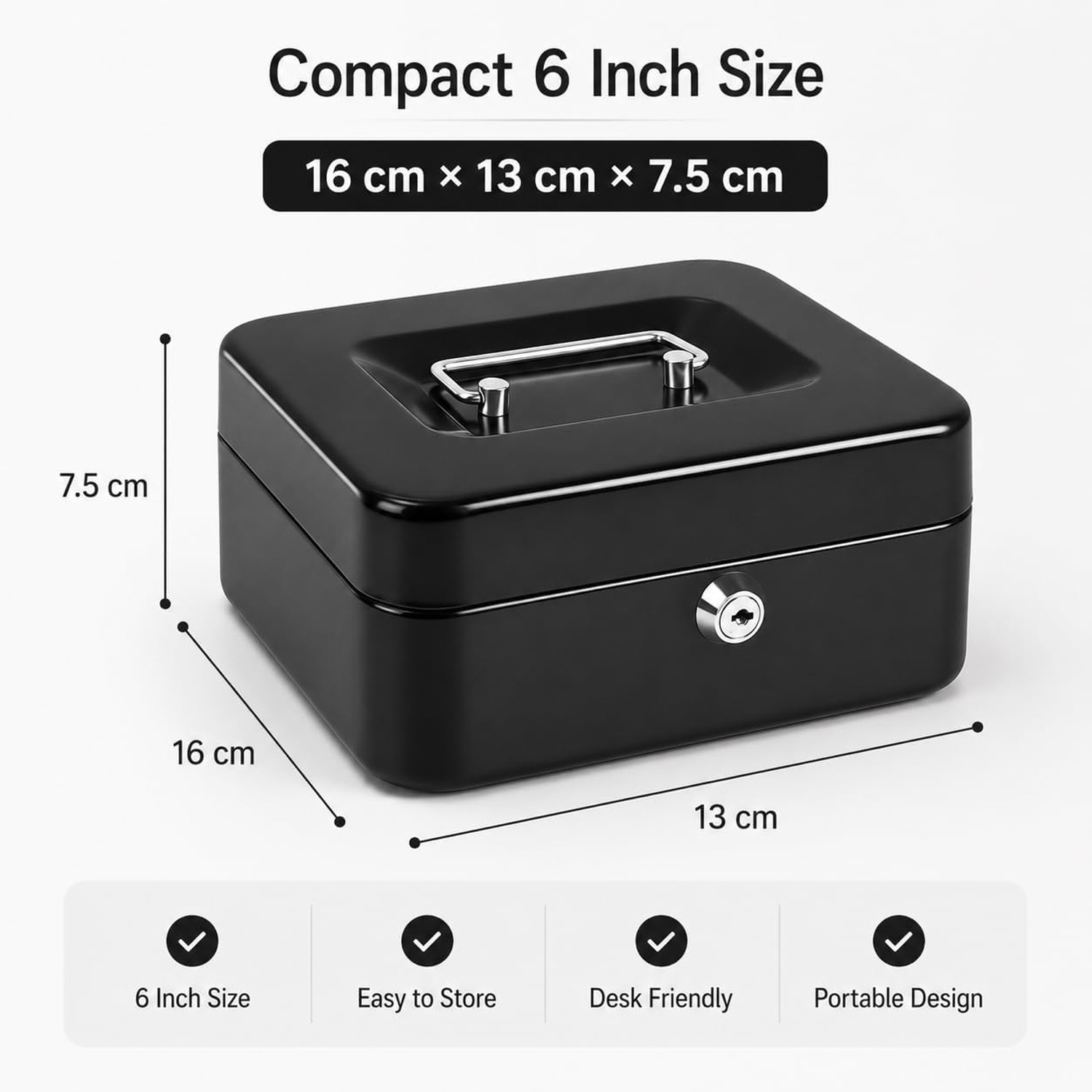
The product details list dimensions of 16 x 7.5 x 13 cm in depth, width and height order. The item weight is 570 g. Those figures describe a compact product, but they do not tell you exactly how much usable room each tray compartment provides.
The maker's description also lists a capacity of 6 cubic inches and a separate chamber depth of 7.6 cm. Do not turn those figures into a promised number of notes or coins. Internal layout, the tray and the shape of your contents all affect what fits.
For compact cash storage, start with your normal float rather than the largest amount you might ever collect. Think about the coins needed for change, the notes you expect and any receipts you must keep. If fit is critical, ask for confirmed internal measurements before ordering.
Who this cash box is likely to suit
A petty cash box can be useful where small sums change hands under supervision. In an office, that might mean keeping a modest float and related slips together. At home, it might mean preparing change for a local sale.
For a market stall cash box, the tray gives coins a defined place while the handle helps with carrying the box to and from the table. Keep it close to the person taking payments. Avoid leaving it at the edge of a stall where someone could reach it unnoticed.
A fundraiser cash box can serve a similar purpose at a school fair or community event. It is most useful when there is a clear person responsible for it. If the event involves several separate selling points, plan how each point will manage cash rather than assuming one small box will serve everyone.
Plan your float before you start
Good cash handling begins before you open the lid for the first customer. Think about your prices and likely payments. An event with many low-priced items may need more small change than one where most payments are rounded amounts.
Count the opening float and make a note of it separately. That helps distinguish starting money from takings at the end. Arrange the tray, check the spare key is stored elsewhere and make sure the working key is easy for the responsible person to find.
Try a few practice transactions if the setup is new. Take out change, put a note away and reach below the tray. This quick check can show whether the layout feels awkward before a queue forms. Adjust the arrangement while you have time.
Carry it carefully and choose a dry spot
The folding top handle is useful when moving the box between storage and a cash point. Before lifting it, close the lid, lock it and check that it is secure. Keep the box reasonably level so loose contents are less likely to shift.
The listed 570 g weight is for the item itself. Coins can add noticeable weight, so take the loaded box into account when planning what to carry. Do not assume that a compact box will stay light once it is full of change.
This model is listed as not water resistant. At an outdoor event, choose a sheltered, dry position and have a plan for rain. A table near drinks also needs care. Keep cups and wet cleaning cloths away from both the box and its contents.
Keep care and storage straightforward
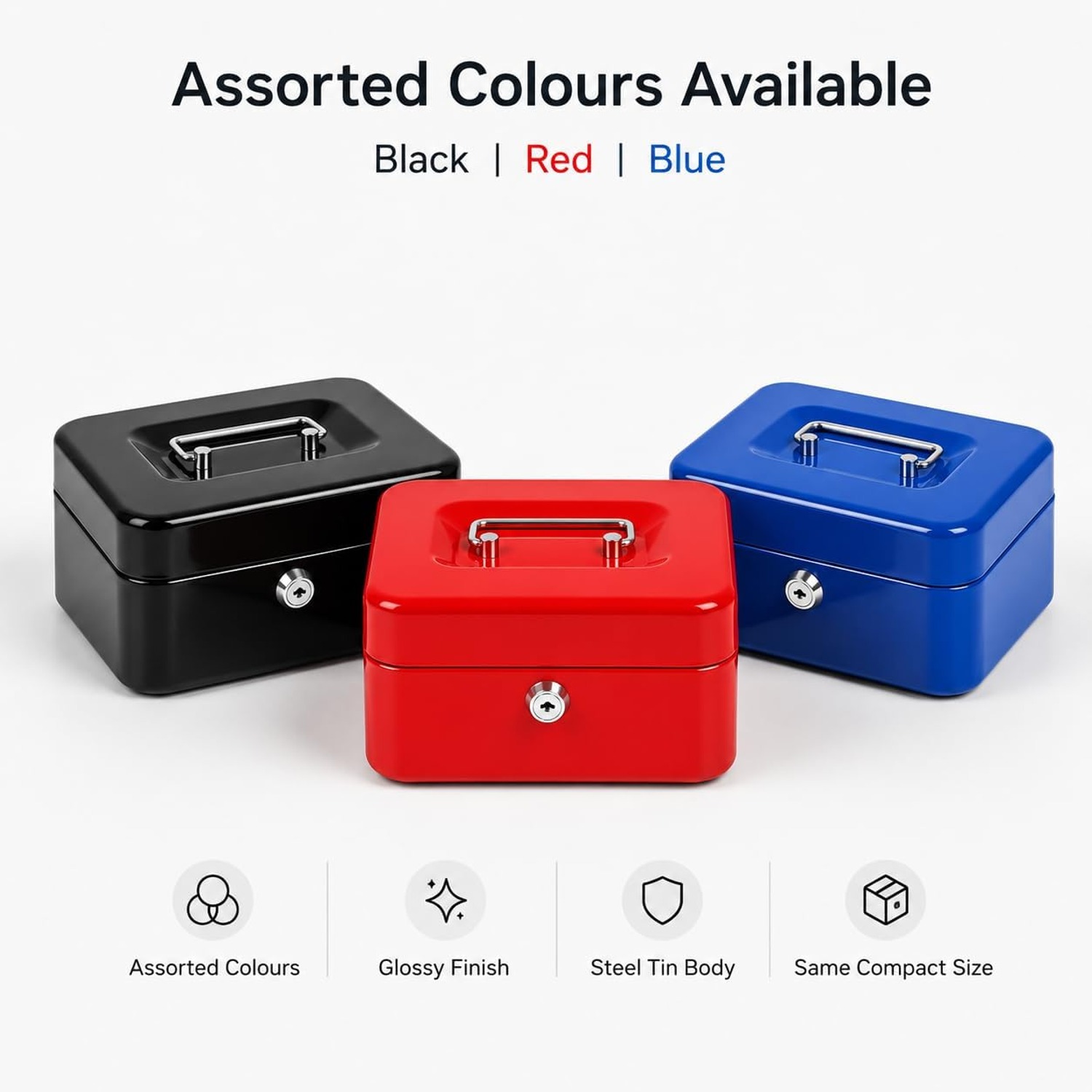
The product details list a black alloy steel body. Routine care need not be complicated. Wipe the box with a soft cloth, dry it after cleaning and remove loose debris from the tray.
Avoid soaking the box or getting liquid into the lock. If a key resists turning, do not force it. First check that the lid is aligned and that nothing inside is pressing against it. The maker does not provide a special lock-maintenance procedure.
After use, empty out items you no longer need and check beneath the tray. Store the box somewhere dry, with the spare key kept separately. A quick check before the next event is easier than discovering a missing key while customers wait.
Compare features, not just the outside appearance
When choosing a cash box with removable tray, focus on your daily routine. Tray layout matters if you handle lots of coins. Lower storage matters if you keep slips or spare change. A handle matters if you move between locations.
Also look at what is not stated. The maker does not give compartment dimensions, a steel thickness or rated protection against fire or burglary. There is no stated warranty term here. If one of those details is essential, get an answer before placing your order.
Check delivery information for your address and read our delivery and returns pages returns policy, especially if you need the box for a fixed event date. A useful product still needs to arrive in time and fit the task.
The short version
Choose this locking cash box if you need a compact place to sort modest takings, with a removable five-compartment tray and simple key access. Two keys and a folding carry handle support everyday use.
Check the listed size carefully, keep it dry and supervise it while handling money. For larger cash volumes, exact document fit or rated security, confirm those needs before deciding. The right cash box is the one that fits your working routine without asking it to do more than its stated features allow.