
The complete guide
Choosing a Cash Box for Coins, Pocket Money and Small Cash Collections
Give loose change a proper home
Coins have a way of ending up everywhere. A few sit beside the door, more gather in a drawer, and the money meant for a small saving goal gets mixed with everyday spending. A cash box gives that money a set place.
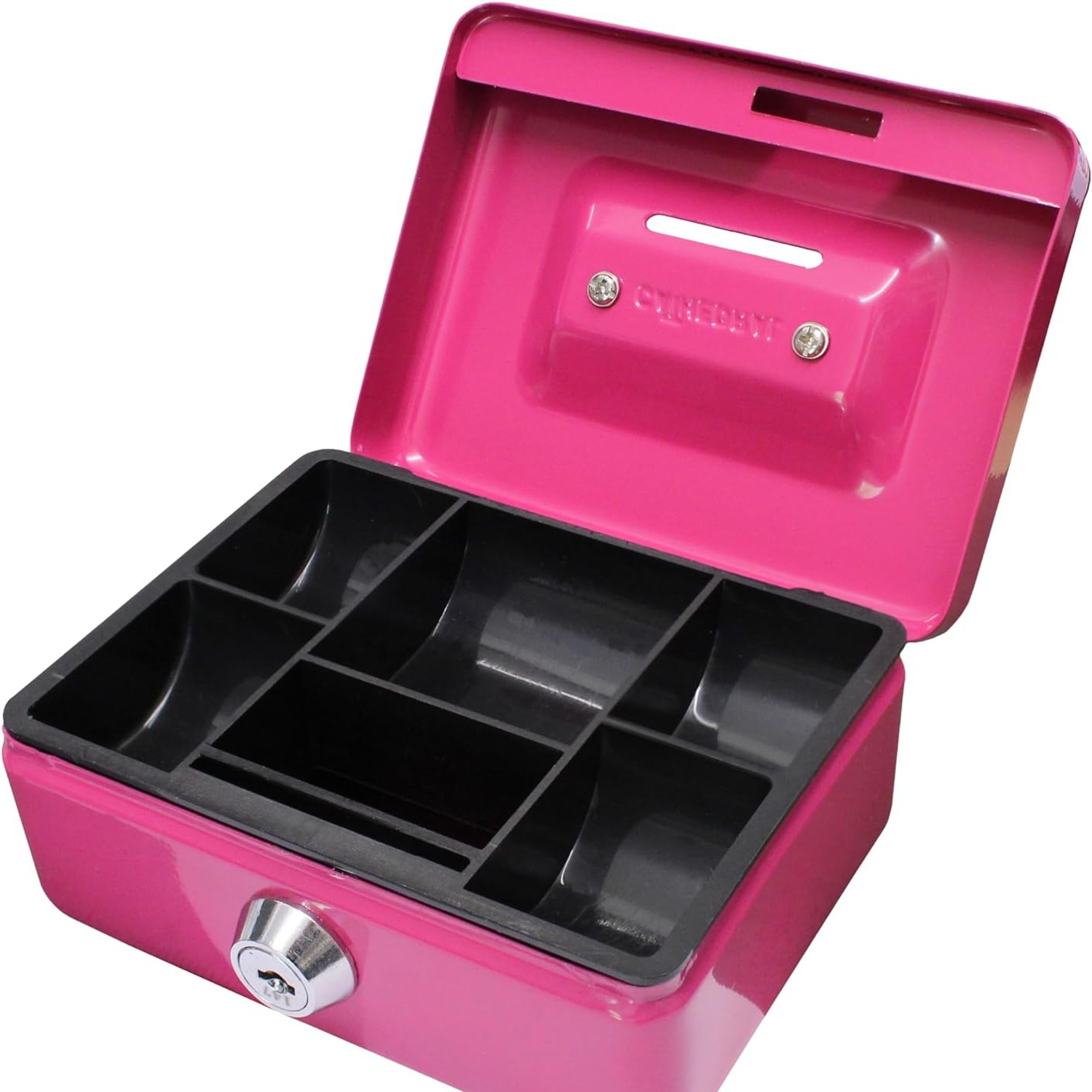
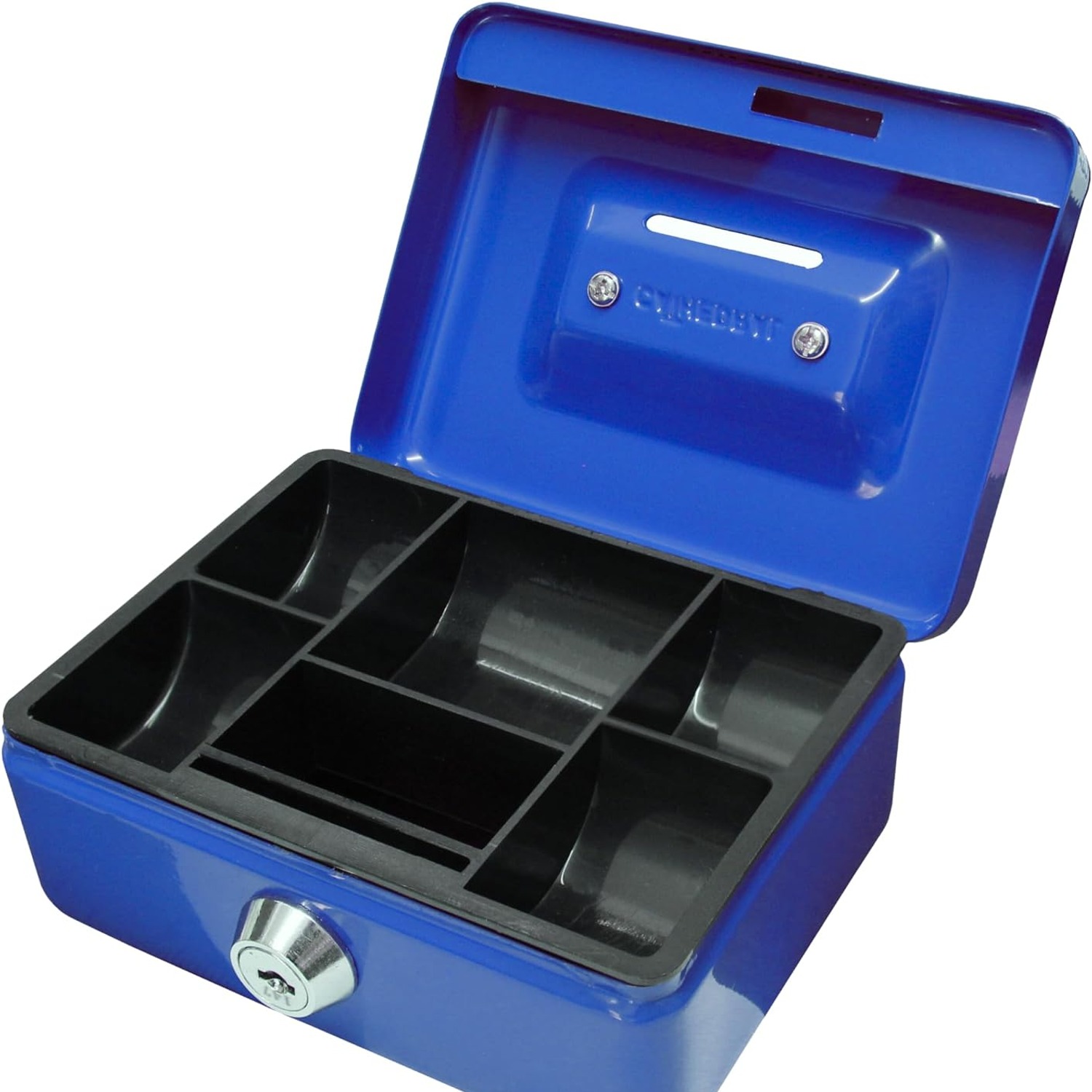
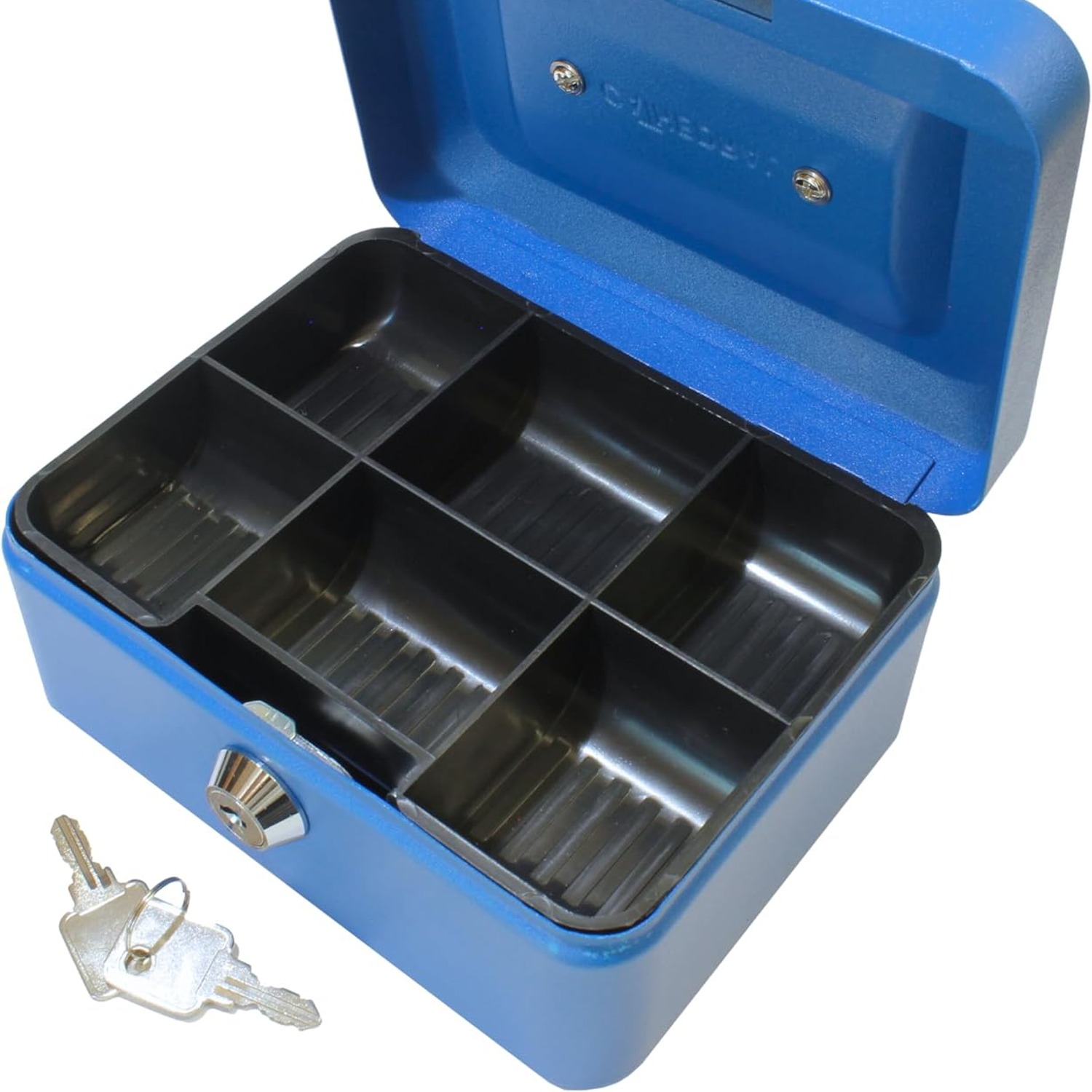
This Cash Box With Tray combines a removable compartment tray, a lid coin slot and a cylinder key lock. It is a straightforward choice to consider for sorting change or keeping a small household fund together.
The main question is whether its layout and level of protection match your needs. A lockable money box can help with organisation and everyday access, but it should not be mistaken for a rated safe. Size also needs checking here because the supplied measurements do not agree.
How the tray and coin slot work together
The tray gives you a place to sort coins rather than leaving them in one loose pile. You might separate denominations or keep money for different purposes apart. A clear arrangement can make counting easier, especially when several people contribute to the same saving goal.
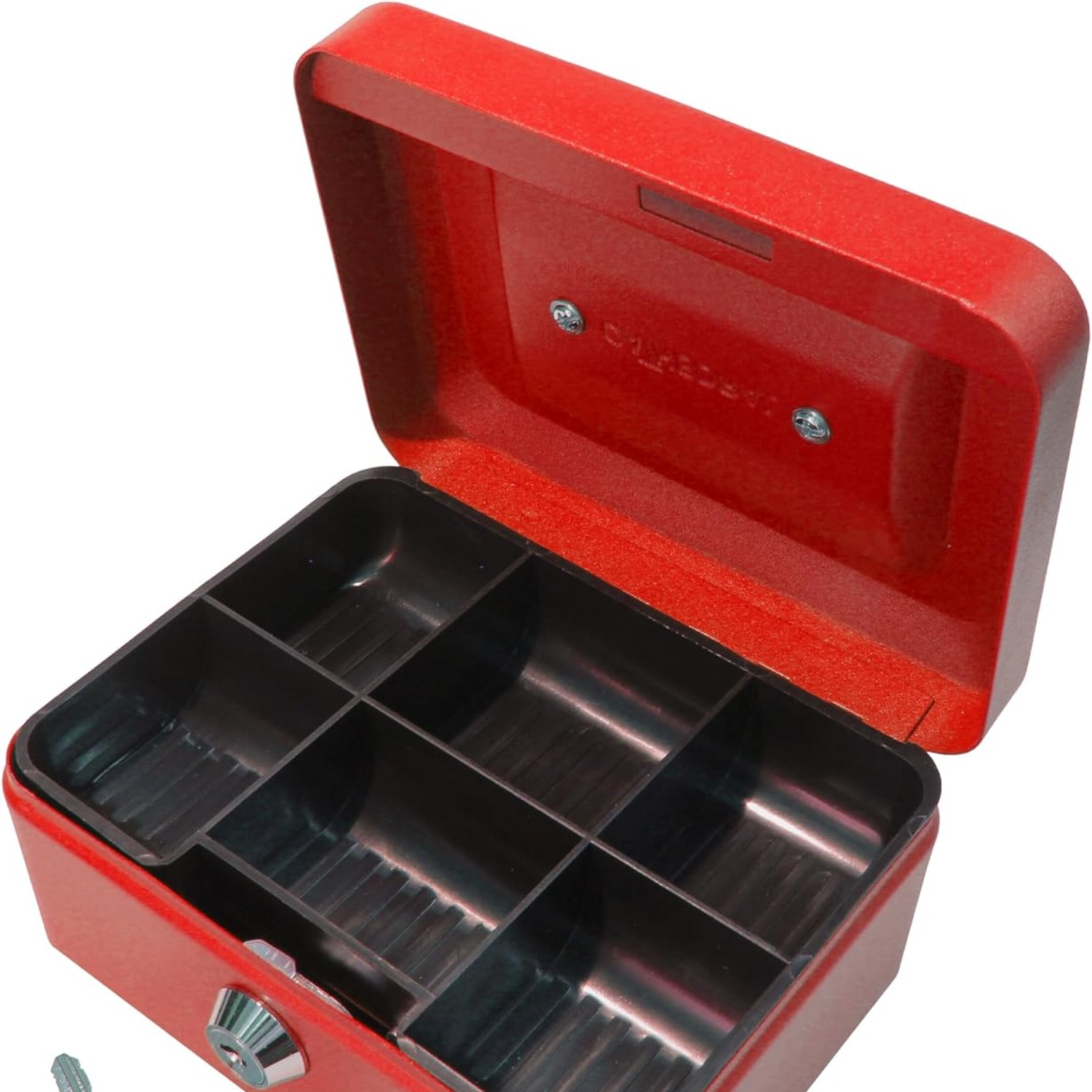
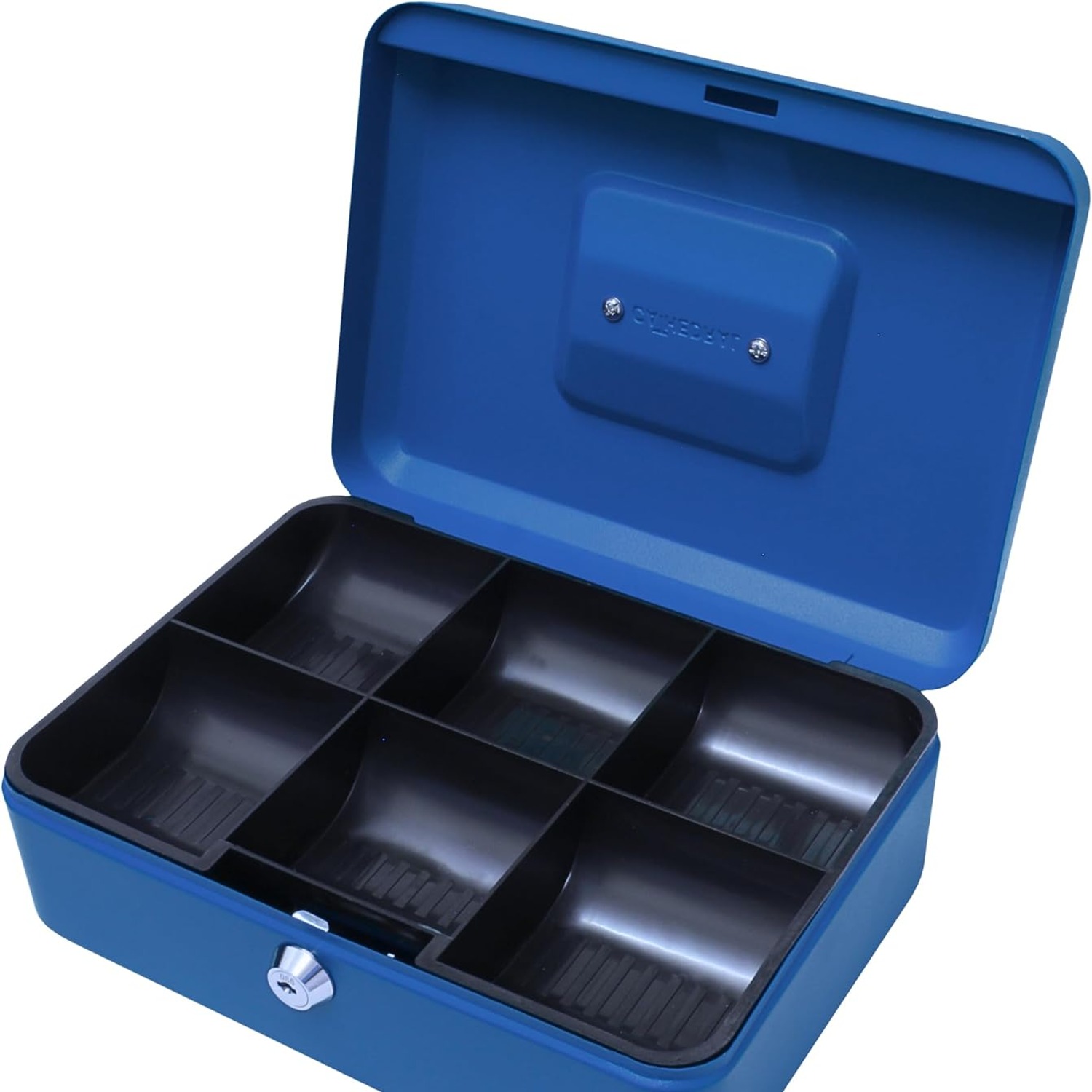
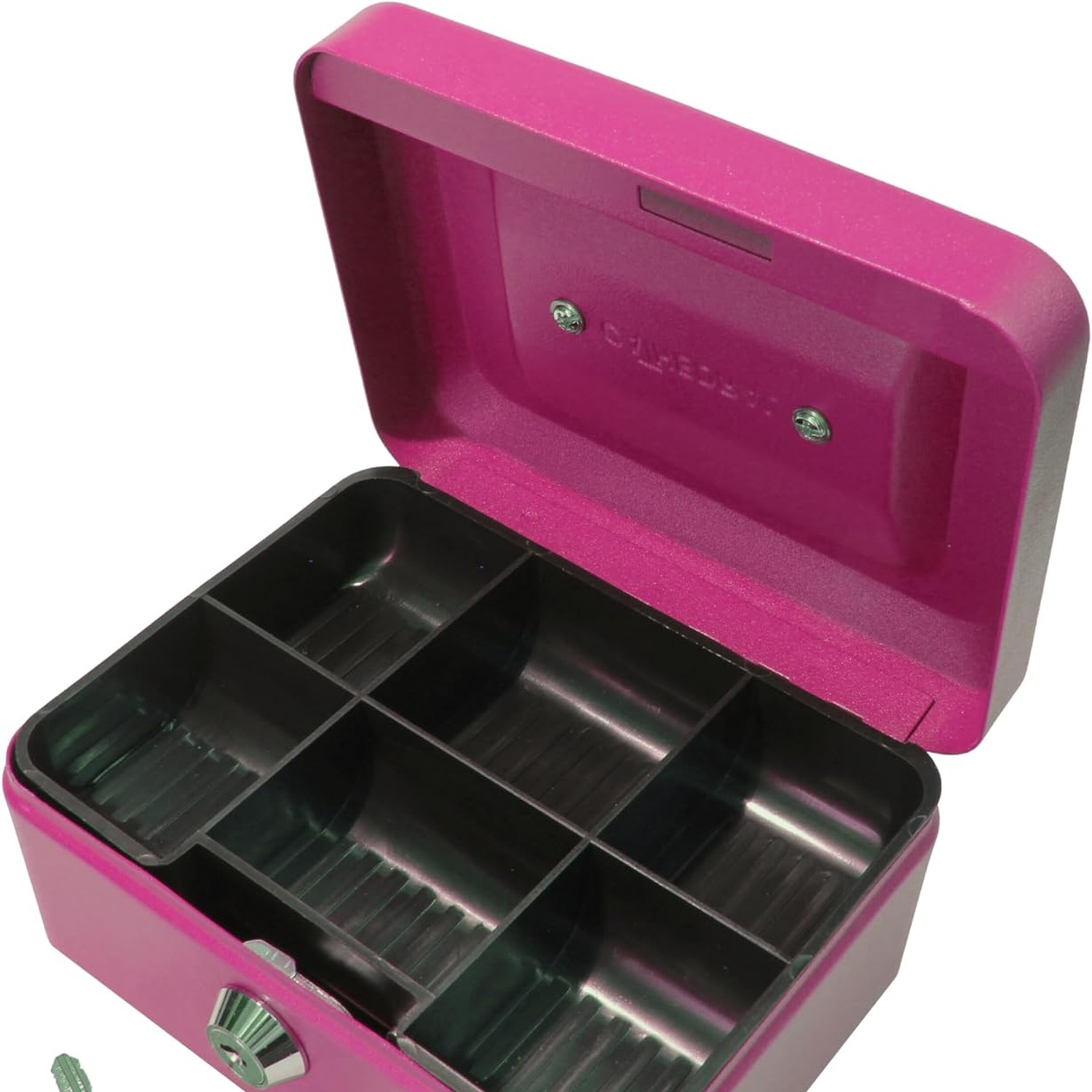
This is a cash box with removable tray, so you can lift the tray out to reach the area underneath. The term tiered cash box refers here to that upper tray and lower space. There is no confirmed expanding tray or stepped display mechanism.
The slot in the lid serves a different purpose. It lets you add coins without opening the box each time. That is useful for a saving routine where deposits happen often but counting happens less often.
The slot dimensions are not given by the maker. If you need it to accept a particular coin or token, ask for that measurement rather than assuming it will fit.
Understand what the key lock provides
A key lockable cash box gives you control over normal access to the contents. You can close the lid, lock it and put the key somewhere separate. That is useful when you want money to stay together between counting sessions.
Two keys are included with this model. Decide where the spare will live before you start using the box. Leaving both keys beside it removes much of the point of having a spare and makes it easier to lose both at once.
No burglary rating, fire rating or insurance approval is stated. The right expectation is basic locked storage, not protection equivalent to a certified safe.
For larger sums or valuable items, first work out what security standard you need. A small cash box is better viewed as an organising tool within a wider approach to looking after money.
Who this box may suit
A household saving routine is one possible use. You could set aside loose change for a shared goal and count it at planned intervals. Having one place for deposits makes it easier to see which money belongs to that goal.
It can also work as a pocket money box during supervised lessons about saving and spending. The coin slot gives a child a simple way to add money, while an adult can keep the key and help with counting.
For a small event or occasional collection, a portable cash box may be worth considering if its capacity suits the task. Think about how much change you need at the start and how often money will be removed.
Do not assume it is large enough for a busy sales table. The usable capacity and compartment count are not confirmed, so those details need checking before you depend on it for payments.
Check the size before making plans
Size is the biggest detail to resolve before buying this box. The maker contains conflicting dimensions. It would be misleading to choose one set and present it as a dependable measurement.
Ask for verified external dimensions if you want to keep it in a drawer, cupboard or shelf space. Allow room to lift it out, use the handle and open the lid. A box that fits when closed may still be awkward to use in place.
Internal measurements matter for a different reason. They determine what fits inside and whether a banknote needs folding. External width alone cannot tell you the usable width beneath the tray.
If you are comparing compact money box options, write down your minimum requirements first. That might be a particular note size, a certain number of coin sections or a fixed storage space. Then compare confirmed figures rather than product names.
Look at materials and everyday handling
The supplied description identifies a powder-coated steel body and a plastic tray. Product details list the colour as pink and the item weight as 390 g.
A fold-down carrying handle is included. This gives you a way to move the box between its storage spot and a table for counting. Close and lock the lid before carrying it, and make sure it has latched properly.
Remember that the stated weight is for the item, not a promise about how a filled box will feel. Coins add weight quickly. Avoid overfilling it or packing money so tightly that the tray and lid no longer sit as they should.
Choose a dry, stable surface when opening it. Removing the tray is easier when the box is level and you have somewhere clear to set the tray down.
Build a saving routine that is easy to keep
A coin storage box is most useful when everyone knows how it is being used. Pick a purpose before the first deposit. That could be keeping spare change together or saving towards one agreed purchase.
Choose a regular time to count the contents. For a child, counting can become part of a lesson about coin values and progress towards a goal. Keep the exercise simple enough that it remains encouraging rather than becoming a chore.
A written total kept separately can help you track deposits and withdrawals. The box itself does not provide a balance or record of what has gone in.
Keep coins and keys away from very young children. If this is being used as a children's savings box, an adult should supervise access and decide where both keys are stored.
Think through small cash collections
For occasional cash handling, the tray layout matters as much as the lock. Before choosing a box, consider which coin values you use most often and whether you need access to notes during each payment.
The maker does not confirm the number of tray compartments or the available note space. If quick change-making is important, ask about those points first. A product described as a small cash box may suit one task but be too limited for another.
During an event, keep the box attended. Close it between uses where practical, and avoid letting a large amount of cash build up on the table.
At the end, count the money in a private place and record the total. These habits do more for orderly cash handling than relying on a lock alone.
Care for the box and keep it dry
This box is listed as not water resistant. Keep it away from sinks, damp storage spaces and places where drinks could spill over it. Do not treat it as outdoor money storage without protection from the weather.
For routine cleaning, use a soft cloth and dry the surface afterwards. Avoid soaking the tray area or letting liquid enter the lock. Abrasive cleaners are best avoided because they can damage finishes.
If the lid becomes hard to close, check the contents before pushing harder. A coin or an overfilled lower space may be stopping the tray from sitting correctly.
Do not force a stiff key. Check that you are using the right key and that the lid is sitting normally, then seek advice if the problem continues.
Separate confirmed features from unclear details
Some source fields mention an alarm, button control and floor mounting. The supplied description does not give enough supporting detail to rely on those features.
Choose this box on what is confirmed: a cylinder key lock, two keys, a lift-out tray, a coin slot and a fold-down handle. If an alarm or fixed mounting is essential, request confirmation before ordering.
The same care applies to delivery and after-sales terms. Check the current delivery estimate and returns policy for your order rather than assuming a date or level of cover.
A little checking now is especially worthwhile if you are buying a gift or need the box for an event.
The short version
This pink metal cash box offers a simple way to gather coins, separate change and add deposits through the lid. The removable tray and two included keys suit a basic, organised saving routine.
Confirm dimensions and capacity before buying. Keep it dry, store the spare key separately and treat it as everyday money storage rather than a rated safe. If those limits fit your needs, its features provide a clear starting point for keeping small amounts of cash in order.