

The complete guide
A Buyer's Guide to Choosing a Decorative Book Safe
A place for the small things you want out of sight
Loose cash, spare keys and a USB stick can end up spread across drawers. A decorative book safe gives those small items one place to live, inside a case that looks more like shelf decor than a storage box.
The appeal is simple. You get a book-shaped case with a lock, without needing space for a larger safe. Set among books, it can keep the compartment out of plain sight while leaving it within reach.
It is still important to know what you are buying. This is discreet storage with a mechanical combination lock. No tested level of fire protection, water resistance or burglary resistance is supplied. Start with that distinction, and it becomes easier to judge whether this type of box suits your needs.
How the book-shaped design works
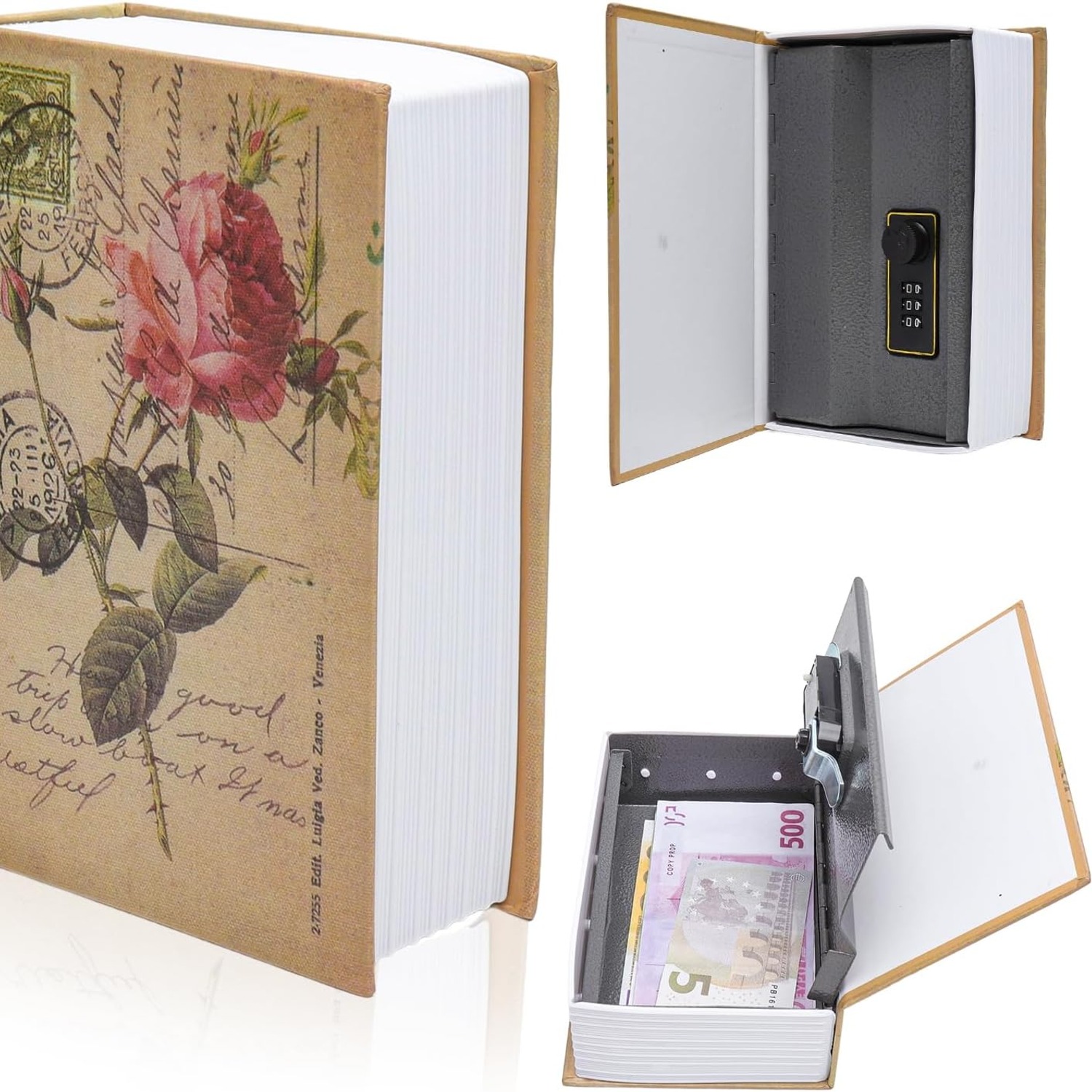
A hidden book safe relies on its outer appearance. The cover shape and page-like details make the storage case resemble a book when closed. Inside is a compartment for small belongings.
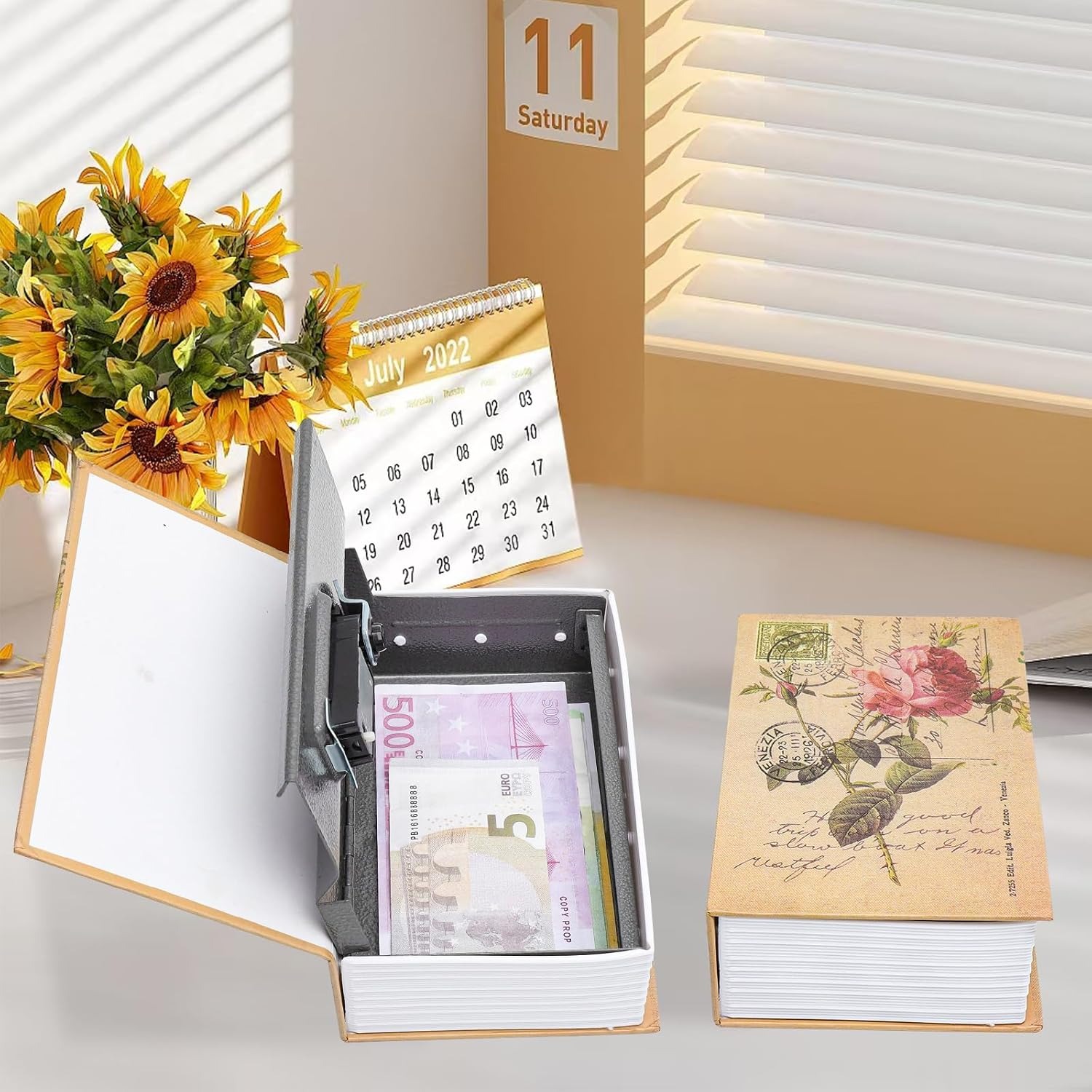
That design is most useful in a setting where books already belong. A bookshelf storage box may look more at home beside other books than on an otherwise empty table. Even so, the appearance is not a promise that another person will overlook it.
Think about everyday access as well. If you will open the case often, choose a spot you can reach without moving a whole shelf of books. The point is to give small belongings a consistent home, not to make them awkward to put away.
Understanding the three-digit lock
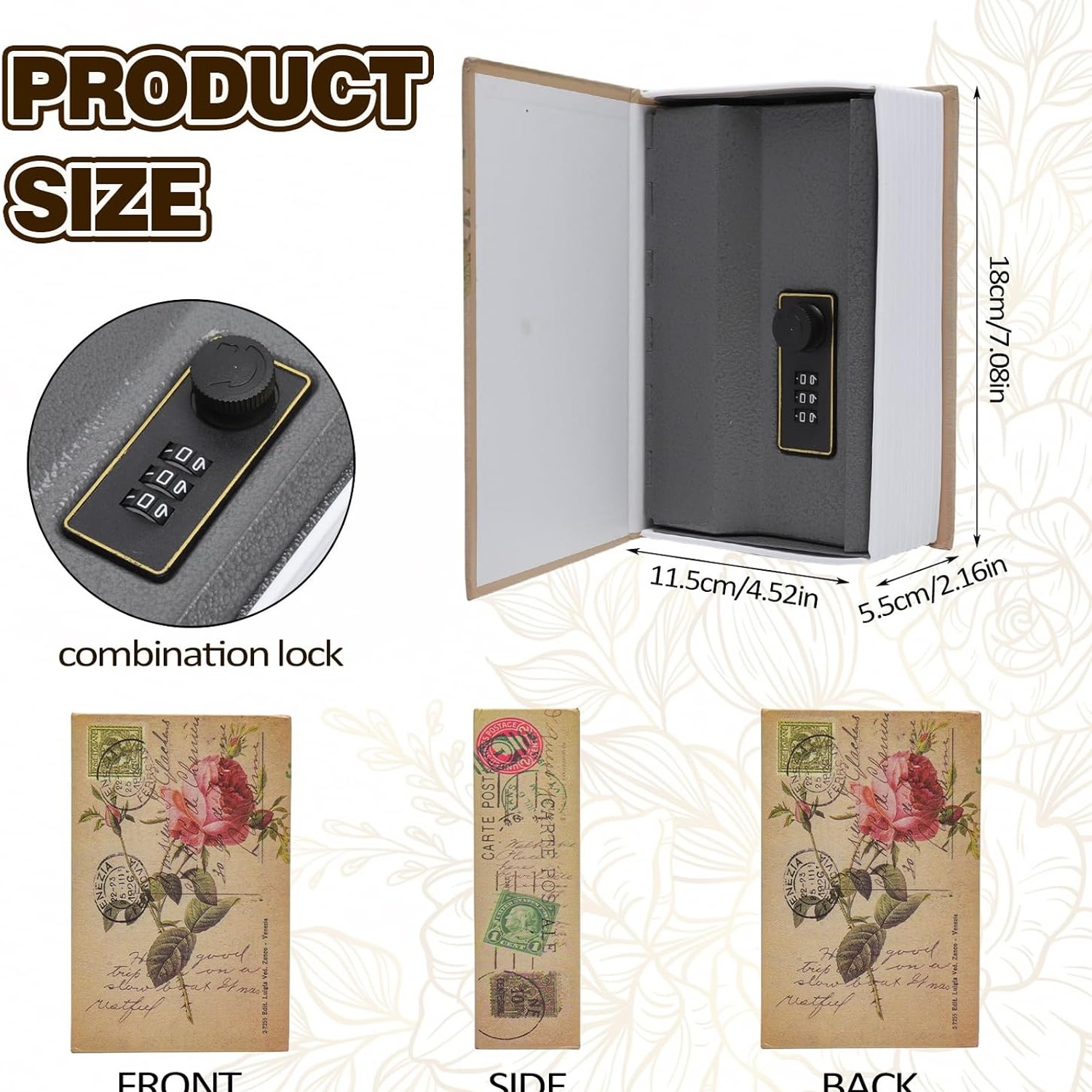
This combination book safe uses a three-digit mechanical code lock. You do not need to keep track of a separate key, which may appeal if you already have too many small keys on your ring.
A mechanical lock also does not depend on batteries. Access depends on the code and the condition of the mechanism, rather than an electronic keypad or power supply.
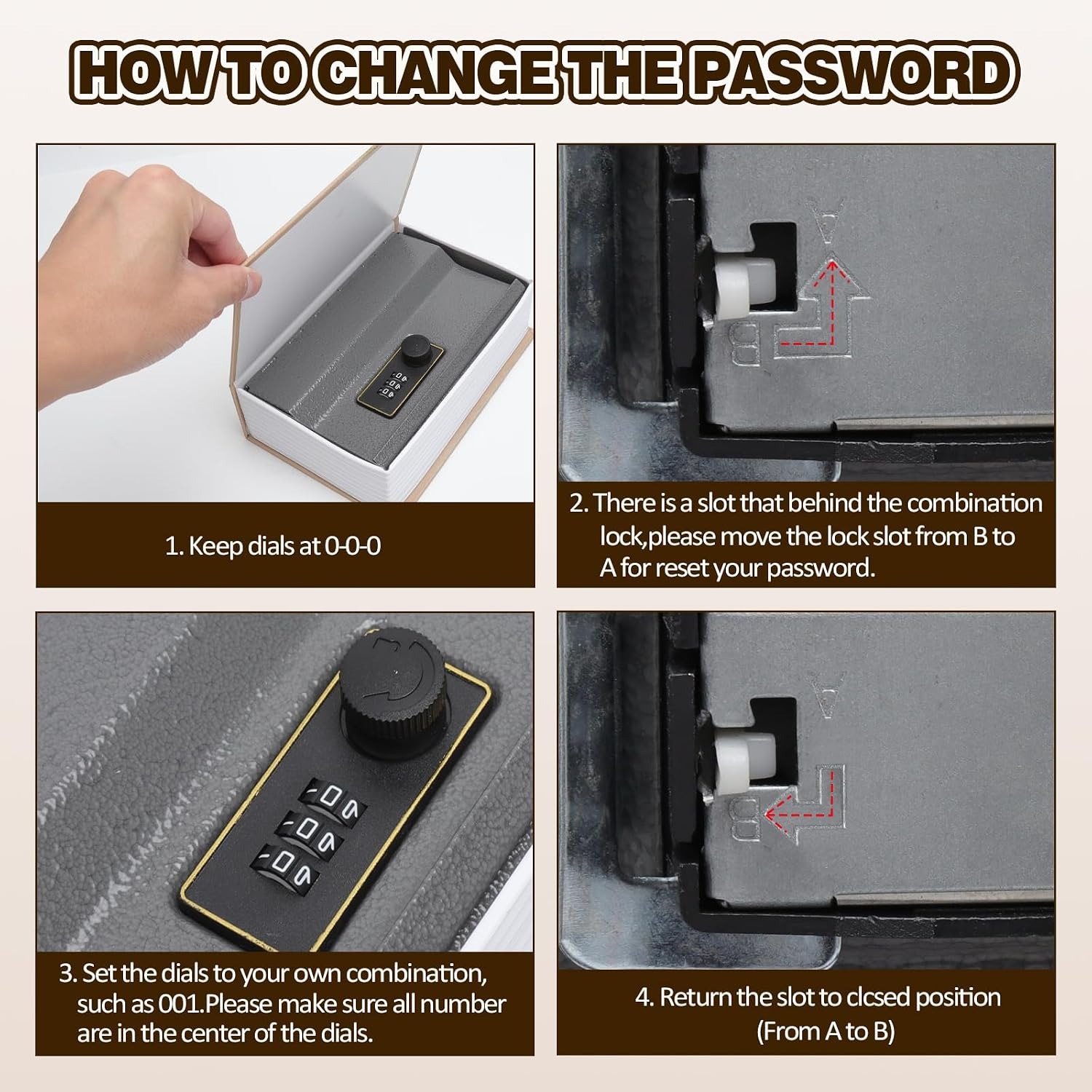
The maker does not include the exact code-setting steps or a recovery method. Read the instructions before using the lock, and test its operation with the compartment empty. If code changes are supported, follow the stated sequence carefully.
Keep a secure record of your code somewhere separate from the case. Avoid assuming that support can recover or reset a forgotten combination, because no override arrangement is specified.
Check the size before choosing your contents
The product details give external dimensions of 18 x 12 x 5.5 cm. The reference description gives 18 x 11.5 x 5.5 cm instead. That half-centimetre width difference matters if you are planning for a tight shelf gap.
More important, neither measurement tells you the size of the usable compartment. Covers, walls and the lock take up space. An object that is smaller than the outside of the case may still be too large for the inside.
For a particular document, watch or key bundle, ask for internal measurements first. Do not assume passport fit or room for an unfolded sheet of paper.
The capacity field is also worth reading with care. It states 283 g, but gives no explanation or internal volume. Treat it as an unclear listing field, not a confirmed load limit or a useful measure of storage space.
What you might keep inside
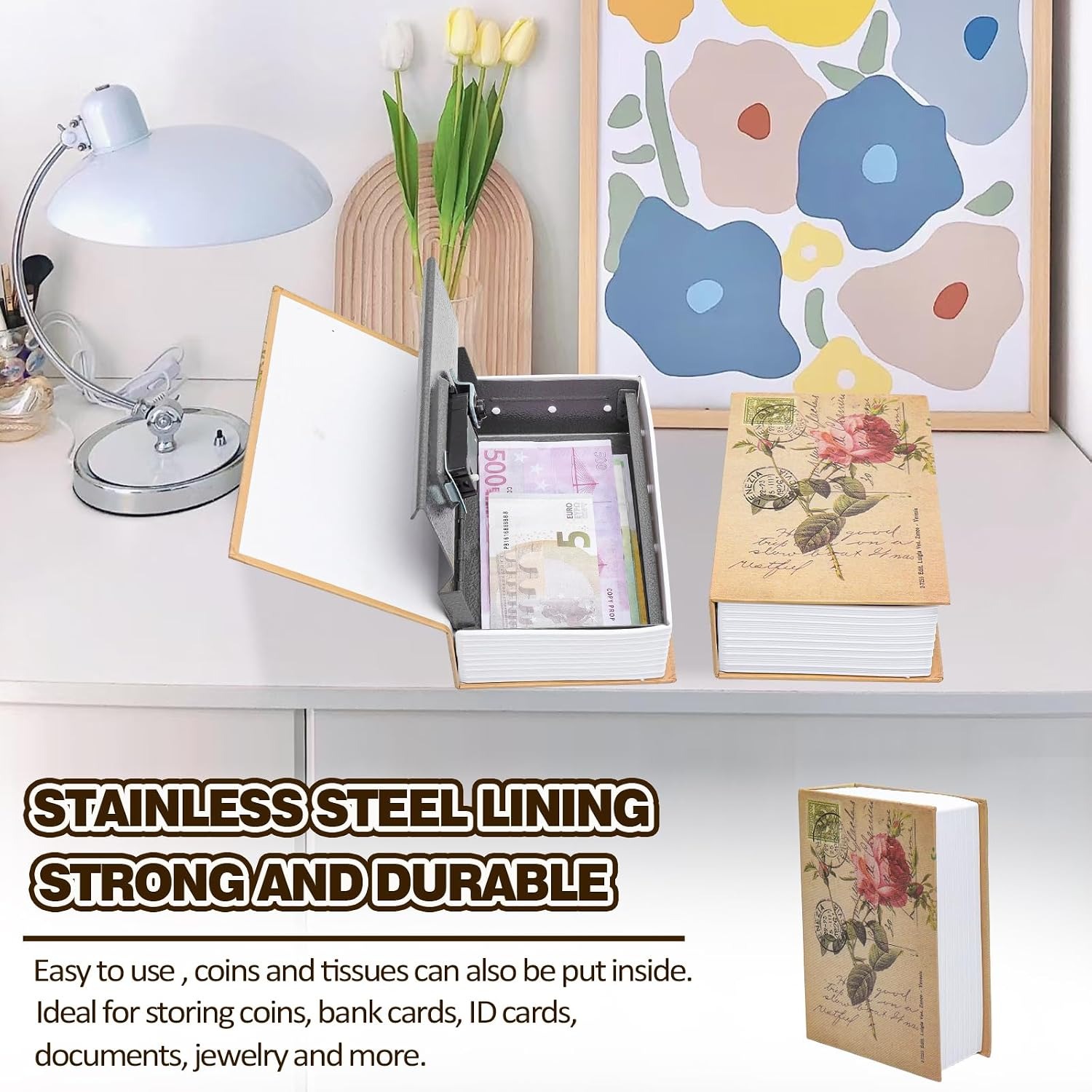
Cash, jewellery, keys and USB sticks are suggested uses. Each is a small item that can be easy to misplace, so a dedicated compartment may help with day-to-day organisation.
For a book safe for cash, think about how you want to store notes. They should sit inside without pressing on the lid or catching near the lock. Avoid filling the compartment so tightly that removing one item disturbs everything else.
If you want a jewellery book safe, check the size of the pieces rather than counting how many you hope to store. No soft lining is specified. A small protective pouch may be useful for delicate items, provided it leaves enough room to close the case freely.
Choose contents with the product's limits in mind. Something being small enough to fit does not mean this is the right level of protection for it.
Materials and the book-like finish
The product details list ABS and alloy steel. The reference copy also mentions cardboard as part of the construction. These details describe a mixed-material case rather than a solid steel safe.
The listed colour is red. The structured colour and material fields do not add further detail, so there is no confirmed shade, finish specification or material thickness to compare.
For most buyers, the practical question is whether a decorative storage book suits the room and the way it will be handled. A case used every day will be picked up, opened and put back often. Give it enough space that the cover does not scrape against nearby objects.
Avoid choosing on appearance alone. The compartment size and lock operation matter more than how closely the cover matches your other books.
Home, office or student room?
A bedroom or living room shelf is one possible setting. The case can provide a fixed spot for a few personal items, especially if they would otherwise be left loose on a surface.
An office book safe may suit small personal belongings too. Work documents are a different matter. Check workplace storage rules before using any personal lockbox for business records, access keys or information-bearing devices.
A dorm room book safe offers the same discreet storage format in a shared living setting. It does not solve every shared-room security concern. At 460 g before contents, this is a movable object, and no anchoring arrangement is specified.
Wherever you place it, consider who can access the room. The lock closes the compartment, but the whole case can still be moved.
Discreet storage versus rated protection
The word “safe” covers products with very different purposes. Some are tested for specific threats. The maker's description supplies no fire rating, burglary rating or water protection rating.
A secret compartment book is therefore better judged as a way to keep small belongings together and out of plain sight. Its disguise and lock are useful features, but they are not evidence of tested protection against tools, heat or water.
For irreplaceable documents or high-value items, look for storage with protection matched to the risk. Check the requirements of any insurance policy rather than assuming a book-shaped lockbox will meet them.
This distinction does not make decorative storage pointless. It simply helps you buy it for a task it is suited to, without expecting a level of security the maker's description does not establish.
Carrying it and giving it as a gift
The listed weight is 460 g, making the case portable before you add contents. That can be helpful when moving between rooms or rearranging a shelf.
Portability also has limits. A portable book safe is not a reason to leave valuables unattended in a shared room, vehicle or public place. The maker gives no travel security rating or fixed mounting method.
As a book safe gift, the design may appeal to someone who likes unusual storage or book-themed objects. It combines a decorative form with a practical compartment.
Match the gift to the person. Someone looking for a small place for everyday odds and ends may appreciate it. Someone who needs certified document protection needs a different type of product.
Simple care and sensible daily use
Keep the case indoors in a dry place. A soft, dry cloth is a sensible choice for routine dusting. Avoid soaking the exterior or allowing cleaning liquid to reach the lock.
Open and close it without force. If the lid resists, check the contents and the lock position before pressing harder. Overfilling can put pressure where it is not needed.
Do not add oils, solvents or other treatments unless the supplied instructions call for them. The maker does not give a specialist cleaning or maintenance process.
Build a simple habit around use. Put items back after taking them out, check the lid is properly closed, and avoid leaving your code displayed nearby. Consistent use matters more than finding an elaborate hiding spot.
A few checks before ordering
First, decide what you actually want to store. Measure those items and seek internal dimensions if their fit is important. Remember the two different external width figures in the maker's description.
Next, decide whether a keyless book safe meets your security needs. If you need tested resistance to a specific risk, ask for evidence before buying rather than treating an unstated rating as implied.
Check delivery information for your address and read the current returns policy.
These checks take little time, but they help prevent the most common mismatch: buying a small disguised box when the real need is either a larger organiser or a rated safe.
The short version
This book box with lock combines a book-shaped exterior, a three-digit mechanical lock and a listed weight of 460 g. It is intended for small belongings such as cash, keys and jewellery.
Choose it for discreet everyday storage. Confirm fit where needed, follow the lock instructions, and keep expectations clear about the protection it provides.