
The complete guide
Choosing a Compact Electronic Safe for Everyday Valuables
Cash in one drawer, a passport in another and jewellery on a shelf can make important belongings hard to keep track of. A dedicated lockable box gives those small items a place of their own. It also creates a clearer routine for putting them away after use.
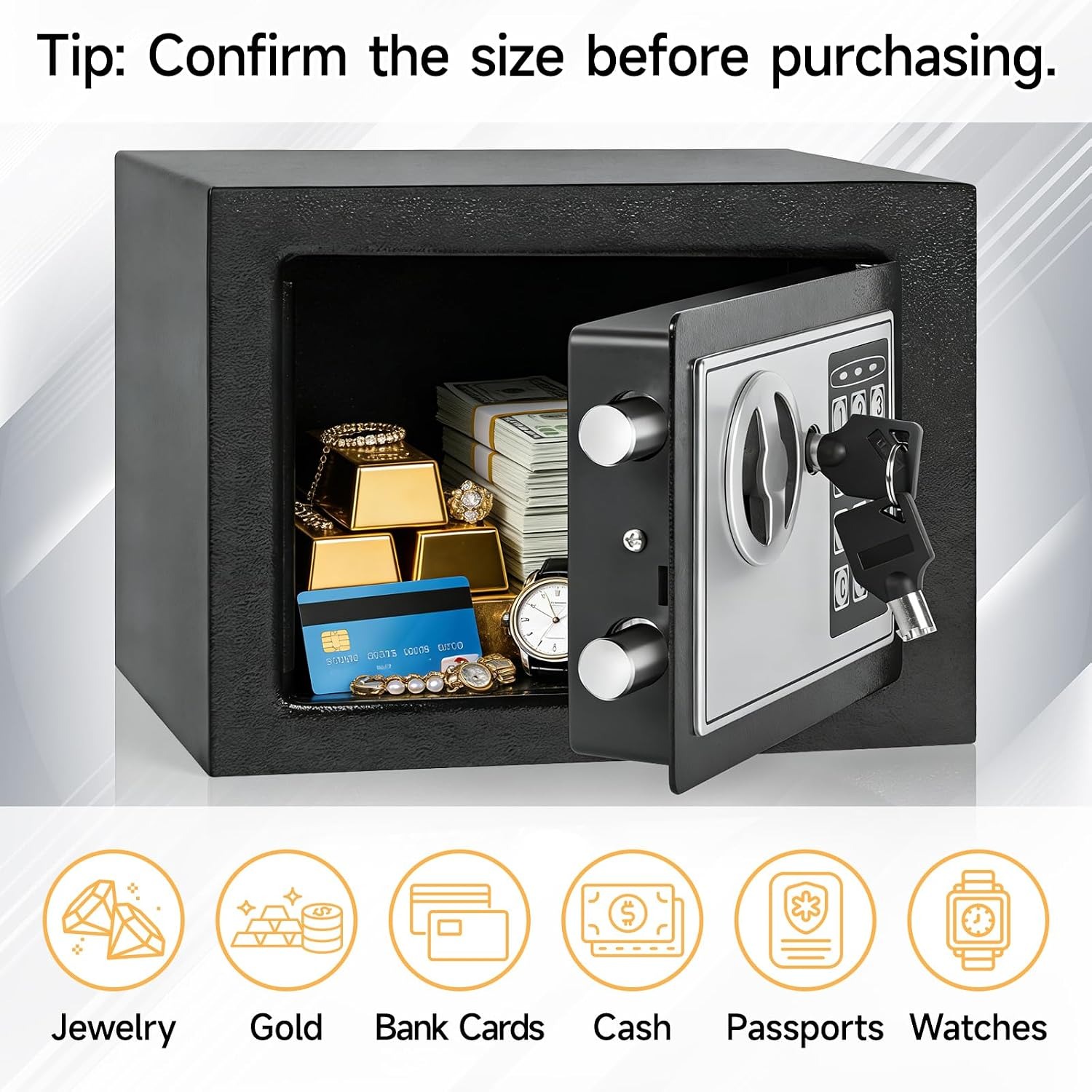
This electronic safe pairs a digital keypad with key access in a compact, freestanding body. Its listed capacity is 6.6 litres. That makes size, access and intended use the main things to weigh up before ordering. Just as important is knowing which forms of protection the maker does not confirm.
Start with what you want to store
Before comparing locks or capacity figures, gather the items you plan to put inside. A few folded notes and a ring box take up very different amounts of room from a stack of documents in covers. Packaging matters too. A small object can become awkward to store once it is inside a rigid case.
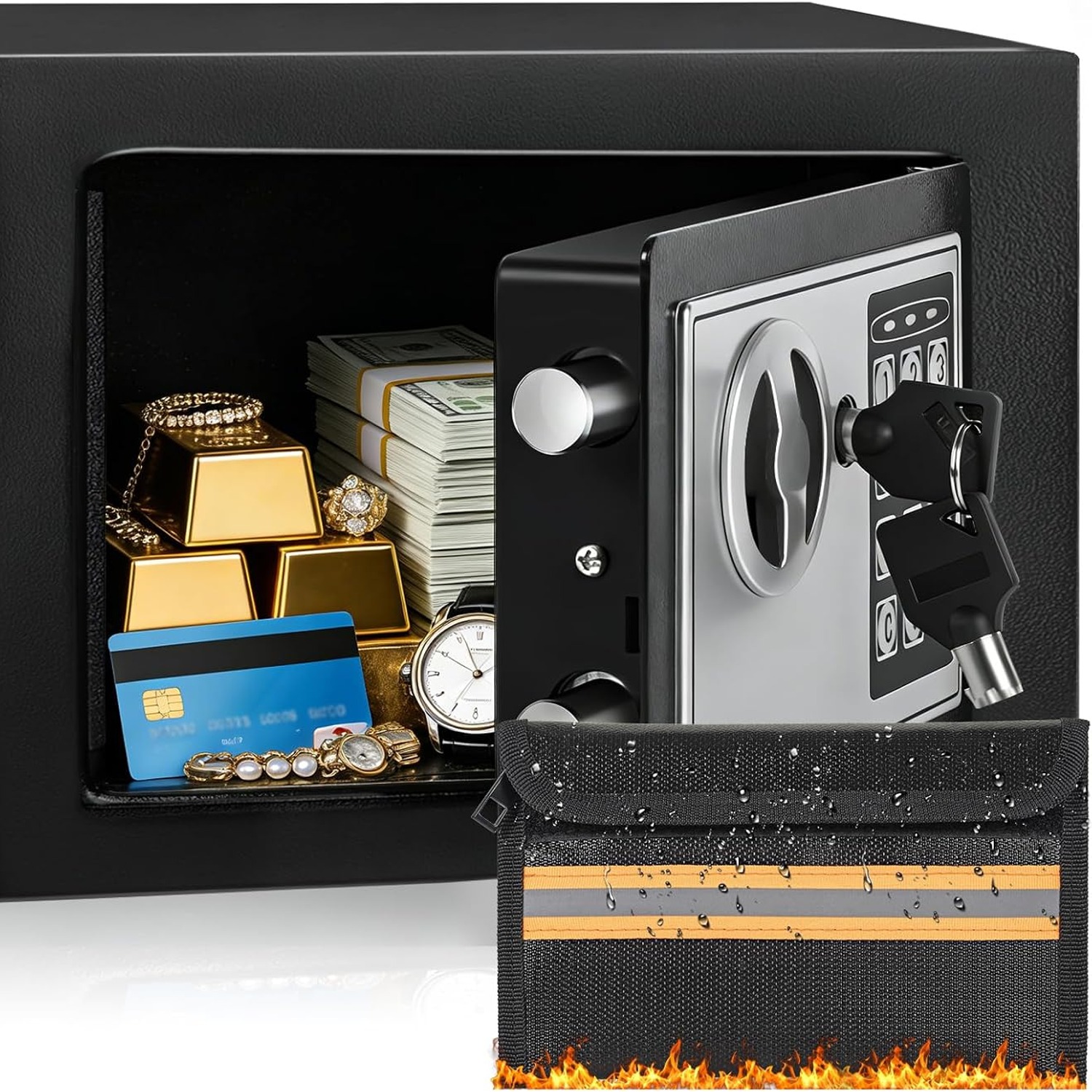
The maker suggests cash, jewellery, medicines and documents as possible contents. Think of that as a starting point, not a promise that every item in those groups will fit. A household valuables safe works best when its usable space matches a clear set of belongings.
Leave room to reach what you need. Filling a small box tightly can make it harder to find items or close the door without catching something. If your collection is likely to grow, compare larger options before settling on this size.
Understand the measurements
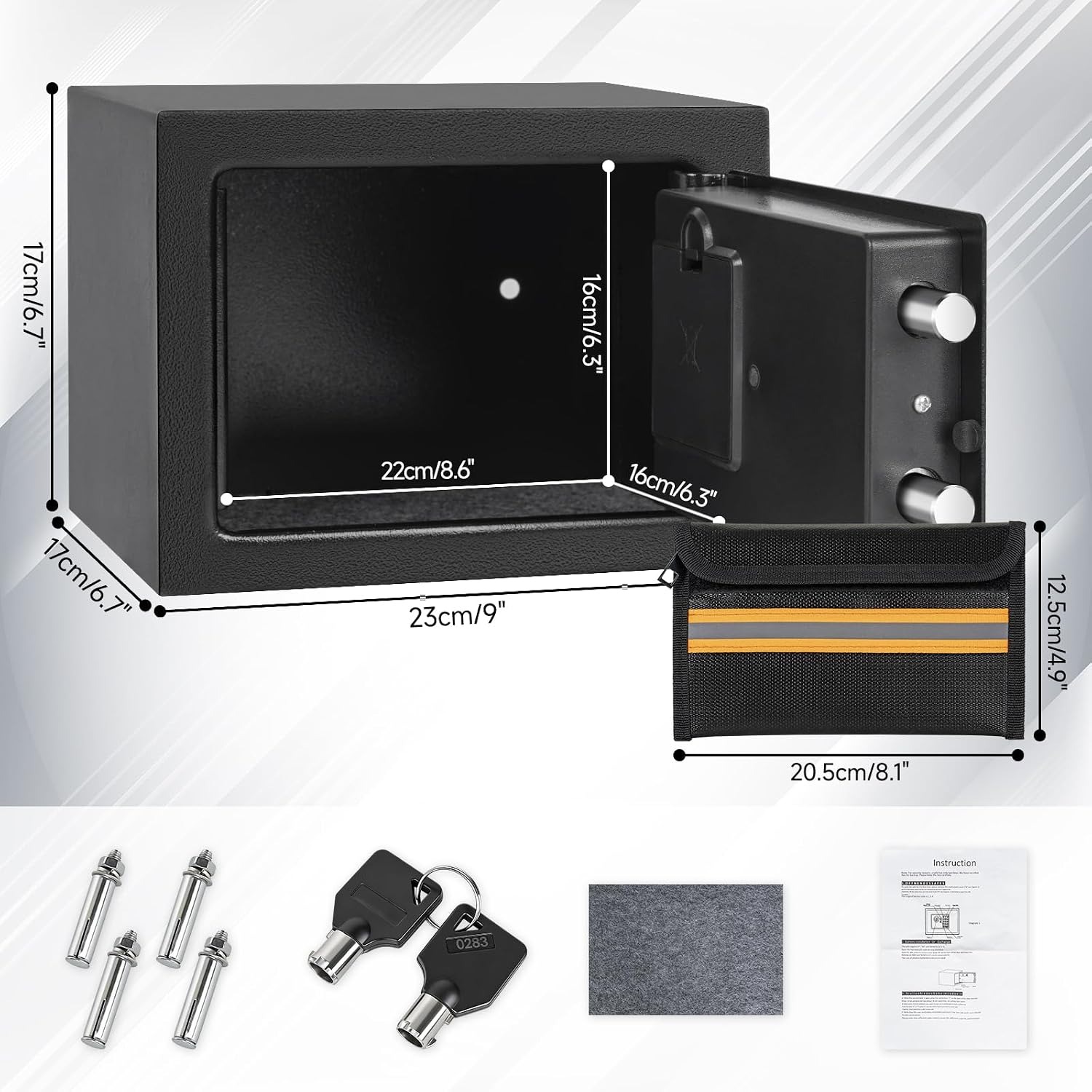
The product details list dimensions of 23 x 17 x 17 cm in depth, width and height order. The stated weight is 2.58 kg. These figures help you plan where the safe might sit and whether the chosen surface is suitable.
They do not give a complete picture of the space available inside. The maker lists a chamber depth of 17 cm but does not state full internal width and height. Door and lock parts can affect usable space, so do not calculate an exact internal fit from the outside measurements.
For a passport storage safe, measure the passport with its cover attached. For jewellery, include the box or pouch you intend to use. If an item is close to the listed dimensions, ask for confirmed internal measurements rather than hoping it will fit.
Unfolded A4 sheets are not a sensible match for the listed size. Anyone seeking flat document storage should look for a model with confirmed internal dimensions that suit the papers.
How the two access methods help
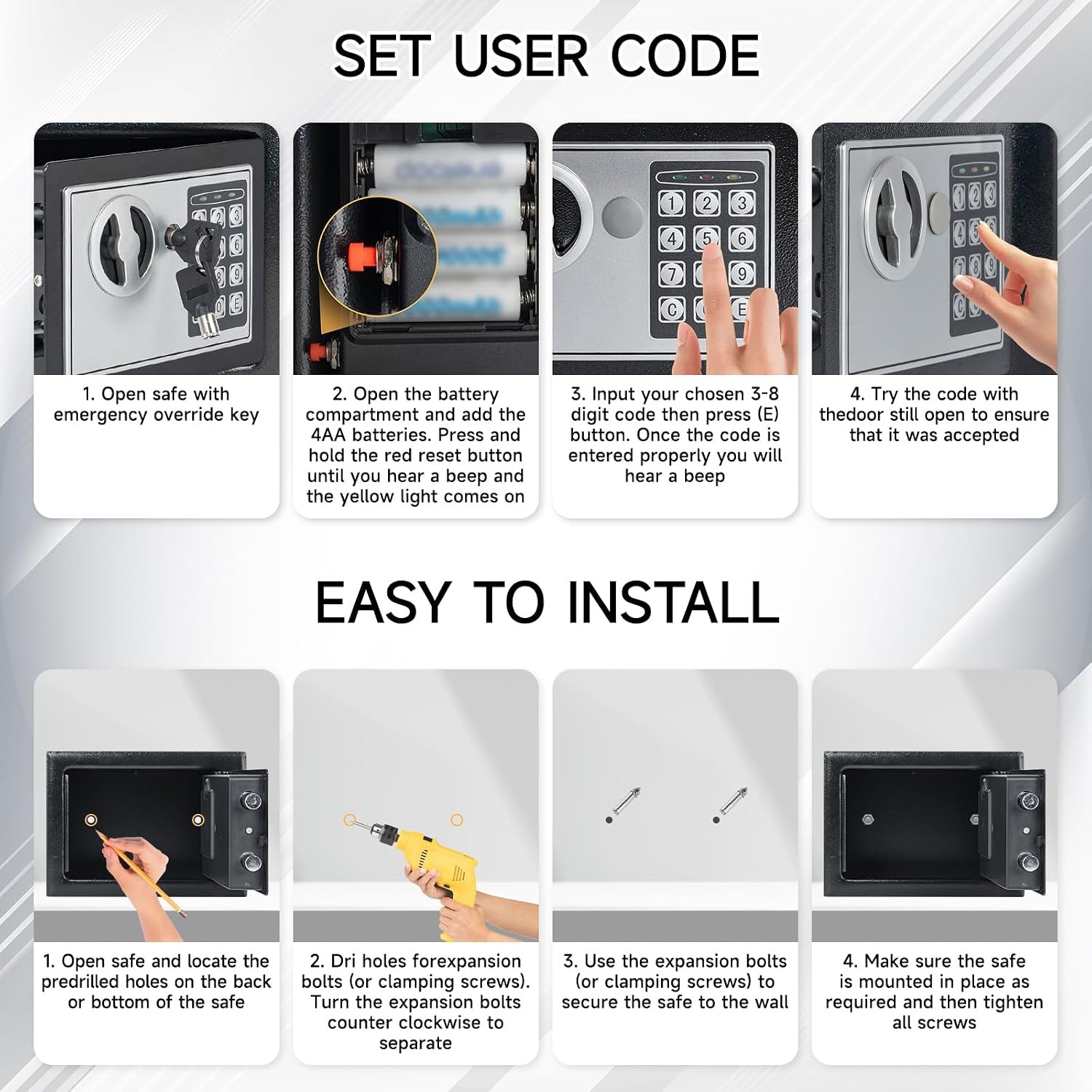
The keypad accepts a personal PIN of 3 to 8 digits. For daily use, code entry means you do not need to fetch a key each time you want to open the safe. Choose a code that authorised users can remember without making it obvious to others.
The maker's description also describes two keys. These offer another way to open the safe if you forget the code or need an alternative to electronic entry. A safe with backup keys still needs a sensible key-storage plan.
Keep both keys outside the safe. Consider storing them separately so that losing one does not mean losing both. Avoid placing a key beside the safe, where it would defeat much of the point of keeping access controlled.
The exact programming steps are not given by the maker. Use the supplied instructions and test access with the door open before putting belongings inside.
Plan for batteries before setup
Batteries are not included. Their type and quantity are also not specified by the maker, so check the instructions before buying replacements or trying to power the keypad.
The maker describes colour-coded indicator lights that show operating and battery status. Read what those signals mean during setup, rather than waiting until an unfamiliar light appears. Keeping the instructions somewhere accessible can save confusion later.
Build a simple checking routine around normal use. Pay attention to battery warnings and follow the stated replacement steps. Keep the backup keys available while changing batteries, and do not assume that every digital keypad safe uses the same reset process.
Choose the location with care
This model is listed as freestanding. That describes its placement type, but it does not confirm fixing holes, mounting equipment or an approved method for attaching it to a building. If anchoring is a requirement, settle that question before purchase.
Choose a stable, level surface that can support the safe and its contents. Allow space for the door to open and for your hand to reach the keypad comfortably. A tight gap may accept the box itself while making everyday use awkward.
A discreet location can keep a personal security box out of casual view, but concealment is not a security rating. Think about who uses the room and who might see you entering the code.
Keep the location dry. No waterproof rating is stated, so a spot exposed to leaks or damp is a poor choice.
Match the security claim to the job
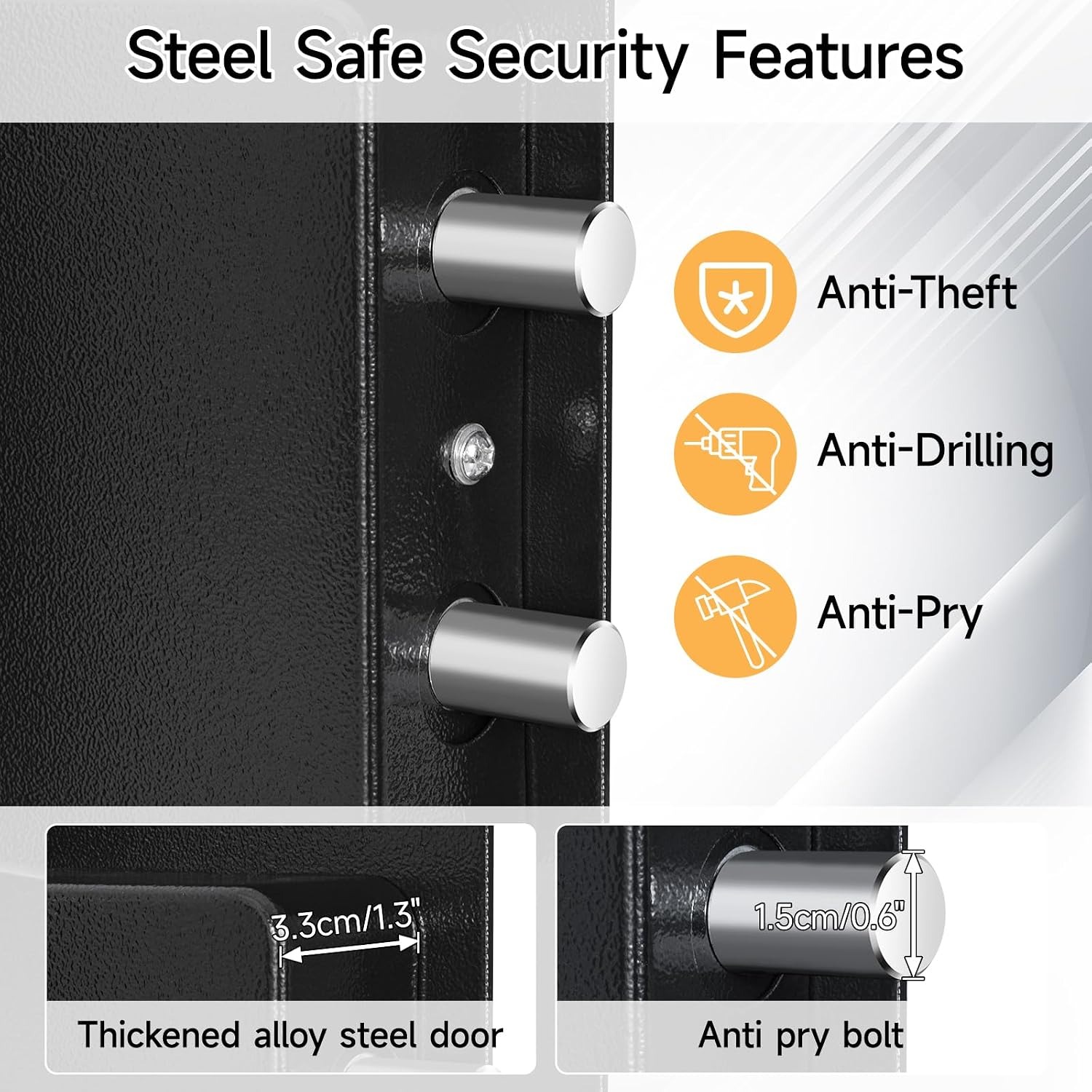
The specifications describe an alloy steel body and electronic combination lock with key access. They do not state steel thickness, a tested burglary grade or an insurance cash rating. These missing details matter when you are choosing protection for valuable items.
A steel home safe should not be assumed to meet a particular security standard just because it has a keypad. If an insurer requires a named rating or a certain installation method, ask for those requirements in writing and compare them with confirmed product information.
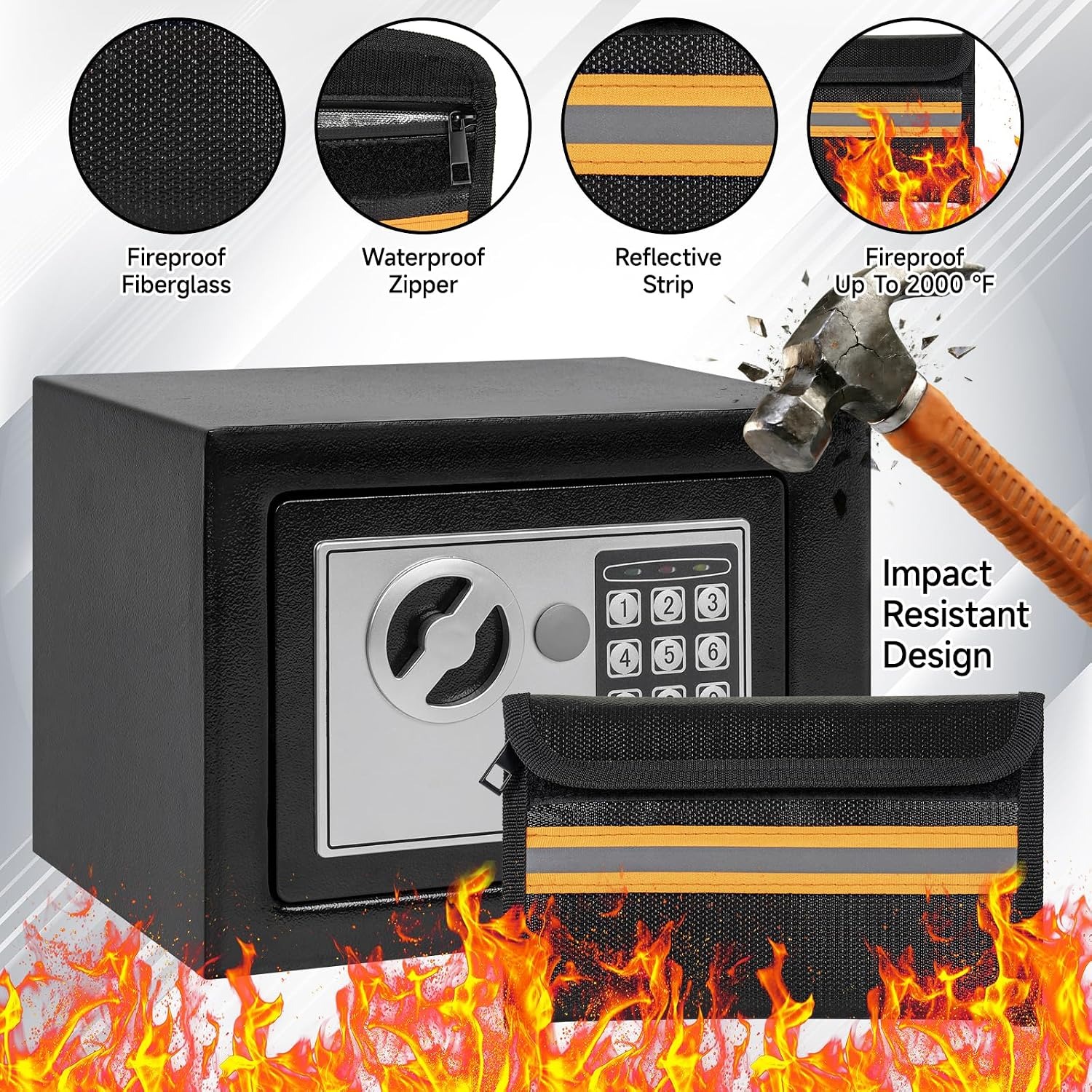
There is also no fire rating stated for the safe. Do not rely on it to keep documents or cash safe during a fire. Fire protection is a separate buying requirement that needs clear evidence.
The same caution applies to water damage. Locking an item away does not establish protection from flooding, leaks or firefighting water.
Think through each type of contents
For cash, consider how you will separate notes and coins without taking up too much space. A cash storage safe may help keep money in one place, but no approved cash limit is given for this model. Your insurer may have different requirements.
For jewellery, check the dimensions of existing cases. Interior padding and separate compartments are not specified. Keep delicate pieces in suitable protective storage rather than assuming the safe has a lined interior.
Medicines need extra thought. Their labels may call for particular temperatures or protection from moisture. This medicine storage safe has no stated temperature control or child-resistant certification, so it should not replace appropriate medicine-safety measures.
For small documents, make sure folding is acceptable before using a compact box. Some papers, cards or covers are better stored flat in a larger space.
Decide whether it suits a shared space
A compact electronic safe may be useful where one person wants a dedicated place for small belongings. In a shared home, decide who should know the code and who should hold the keys. Clear access rules are more useful than a code passed around without thought.
For office use, check workplace policies first. A small office safe is not automatically suitable for customer records, business takings or items subject to specific storage rules.
Avoid choosing it for a regulated purpose based only on a general product description. No firearm storage approval is stated, for example. Where a legal or contractual standard applies, you need confirmed evidence that the storage meets it.
Keep care and daily use simple
Wipe the exterior with a soft, dry cloth. Keep liquid cleaners away from the keypad and keyhole, and avoid abrasive products. Follow the supplied maintenance instructions rather than adding oils or treatments without guidance.
Take a moment when closing the door. Make sure no paper, pouch strap or other item is trapped, and check that the door is secured before walking away. A consistent routine helps reduce simple mistakes.
Store the instructions separately from the safe, along with any purchase records you may need. Keep PIN information away from the box and do not label a nearby key with an obvious description of what it opens.
Check the order details before buying
The maker describes one safe box and two keys. Batteries are not included, and other accessories are not confirmed. Do not plan around a mounting kit, interior organiser or protective bag unless its inclusion is separately verified.
The supplied store information states free delivery on orders to Ireland.
Read the returns terms as well. This is especially useful when internal fit is uncertain or when buying as a gift. Knowing the process beforehand makes it easier to decide whether to order or ask more questions first.
The short version
This 6.6-litre electronic safe offers a compact alloy steel box, a programmable keypad and two keys. It is worth considering for suitable small belongings when you want a dedicated lockable storage spot.
Measure first, check the battery requirements and plan where the keys will live. If your needs include fire protection, tested burglary resistance, approved anchoring or insurance cover, choose only after those details have been confirmed.