
The complete guide
Choosing a Biometric Safe Box for Home or Office
Cash in a drawer, jewellery in several boxes and important papers on a shelf can be hard to keep track of. A home safe gives those items a single, lockable place. The right choice depends on what you want to store, how often you need it and what level of protection you require.
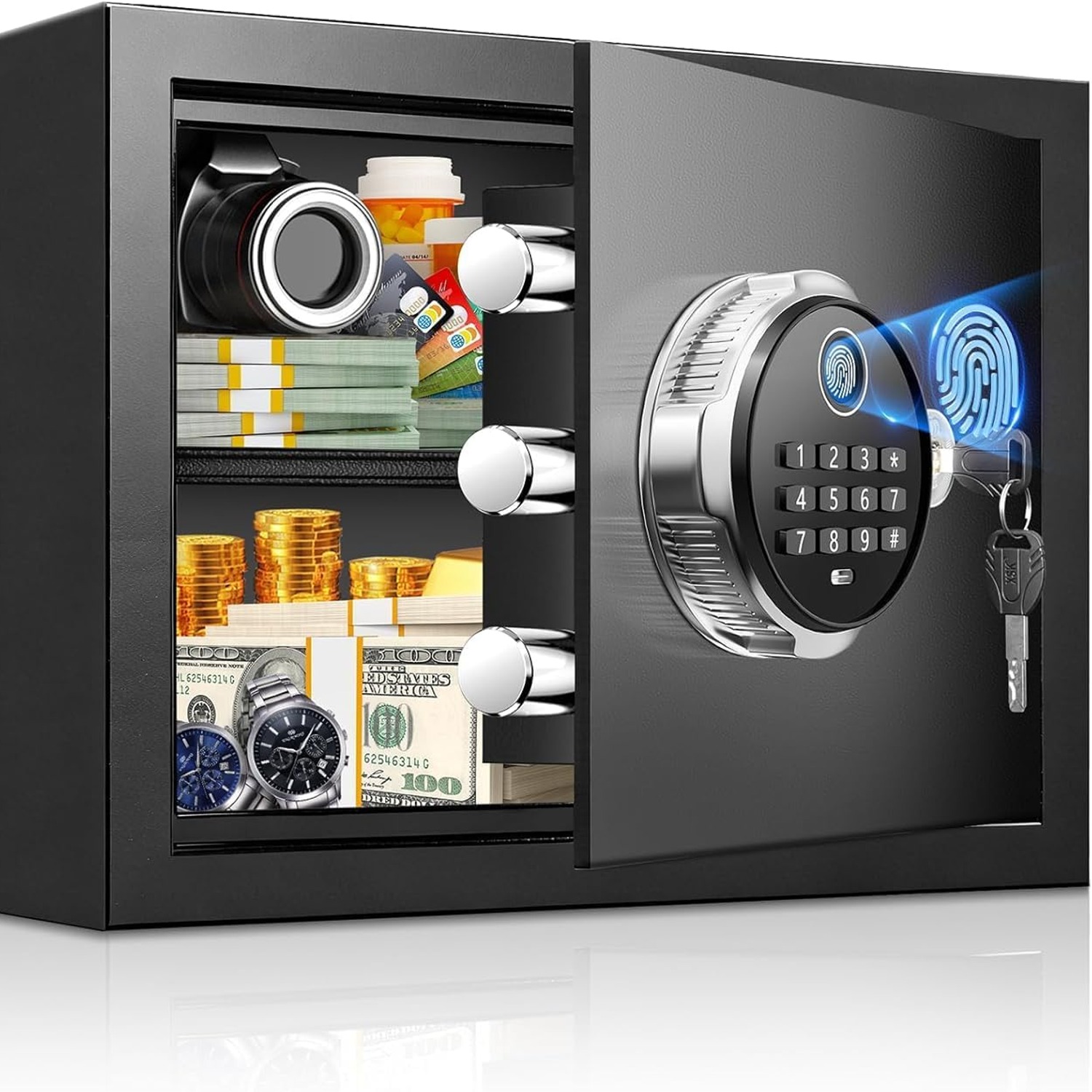
This biometric safe box combines fingerprint entry with a keypad and emergency keys. It has a listed 20L capacity and supports wall or floor mounting. Those features make it worth considering for everyday storage, but size and access features are only part of the decision. Here is what to check before you buy.
Start with the items you want to store
Make a small collection of the things you expect to keep inside. Include their cases, envelopes or pouches, not just the bare items. A watch box takes up more room than a watch, and a document wallet may be wider than the papers it holds.
This compact security safe is described for cash, jewellery and documents. That does not mean every folder or presentation box will fit. Think about items you may add later, too. Leaving some room makes it easier to reach what you need without emptying the whole safe.
For high-value items, check your insurance terms first. A safe's capacity tells you about storage volume, not the value an insurer will cover.
Understand the different access options
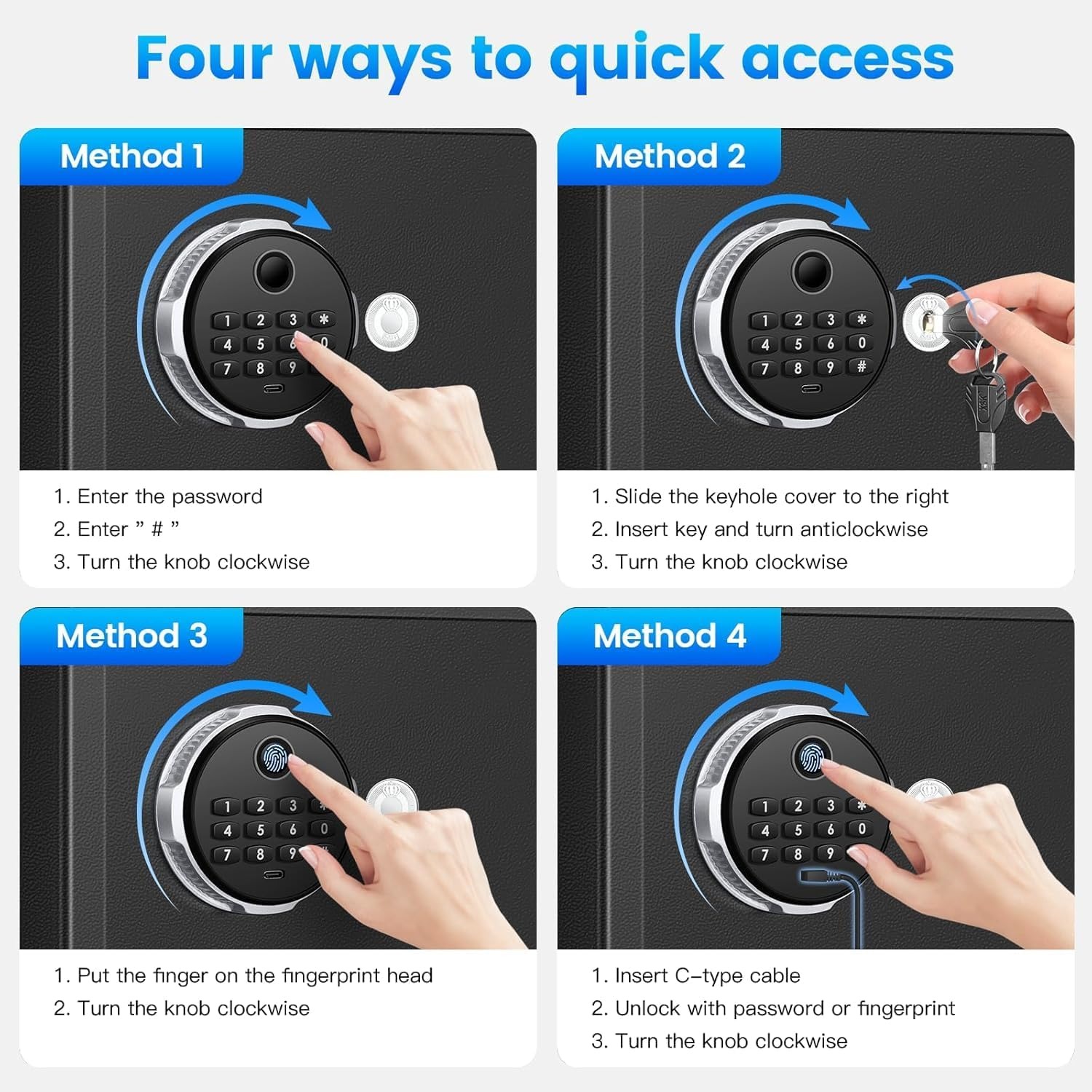
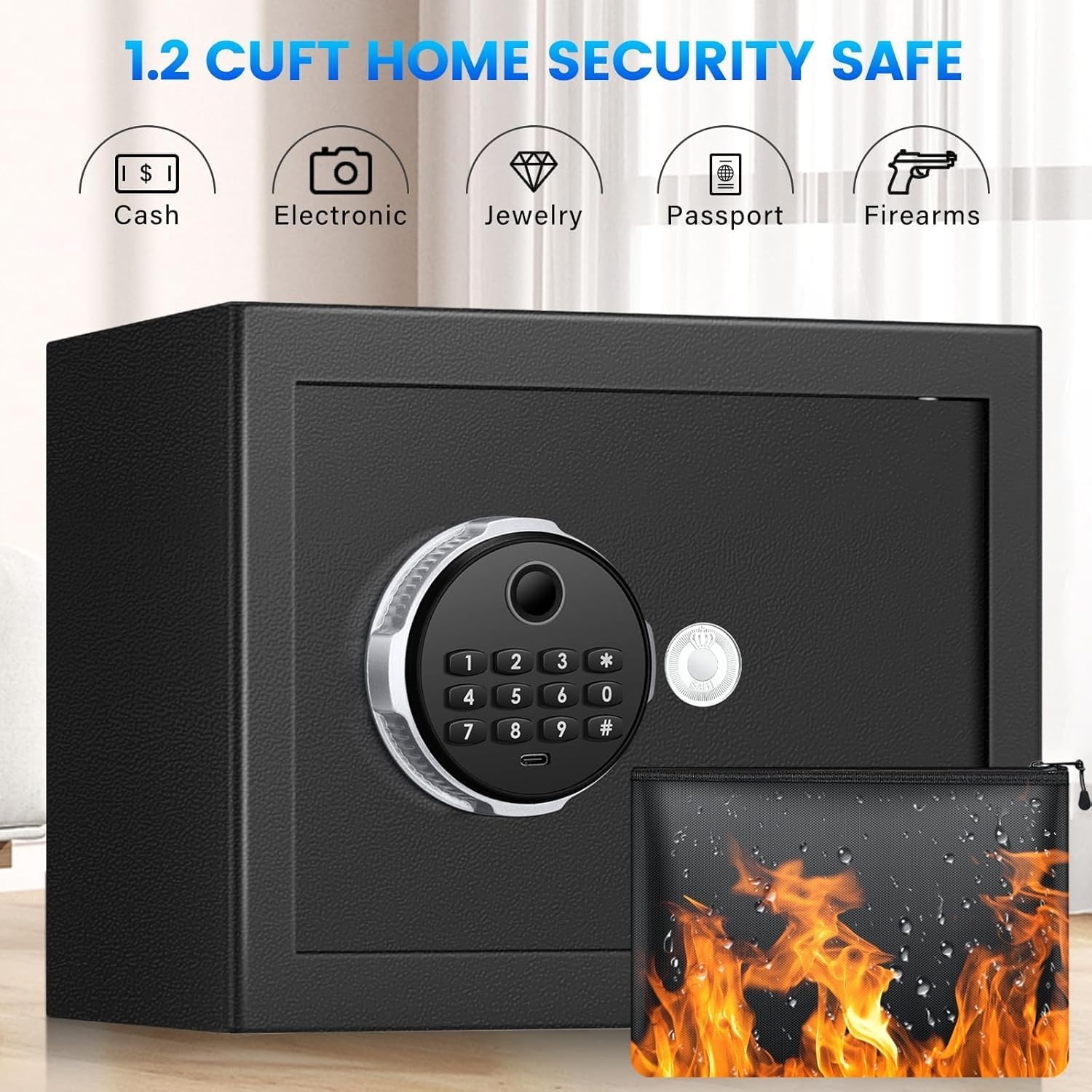
A fingerprint home safe can be convenient when you open it often. Instead of entering a code each time, you use a registered finger. This model stores up to 29 fingerprints, allowing you to register more than one finger or grant access to other authorised users.
There is also a digital keypad. That gives you another routine access method, while two supplied emergency keys provide a physical backup. Read the setup instructions carefully before deciding who will have access and how you will manage code changes.
Do not assume that several access methods mean they must be used together. The maker does not clearly confirm a required fingerprint-plus-code mode. Check the manual if that is an important part of your buying decision.
Check size beyond the litre figure
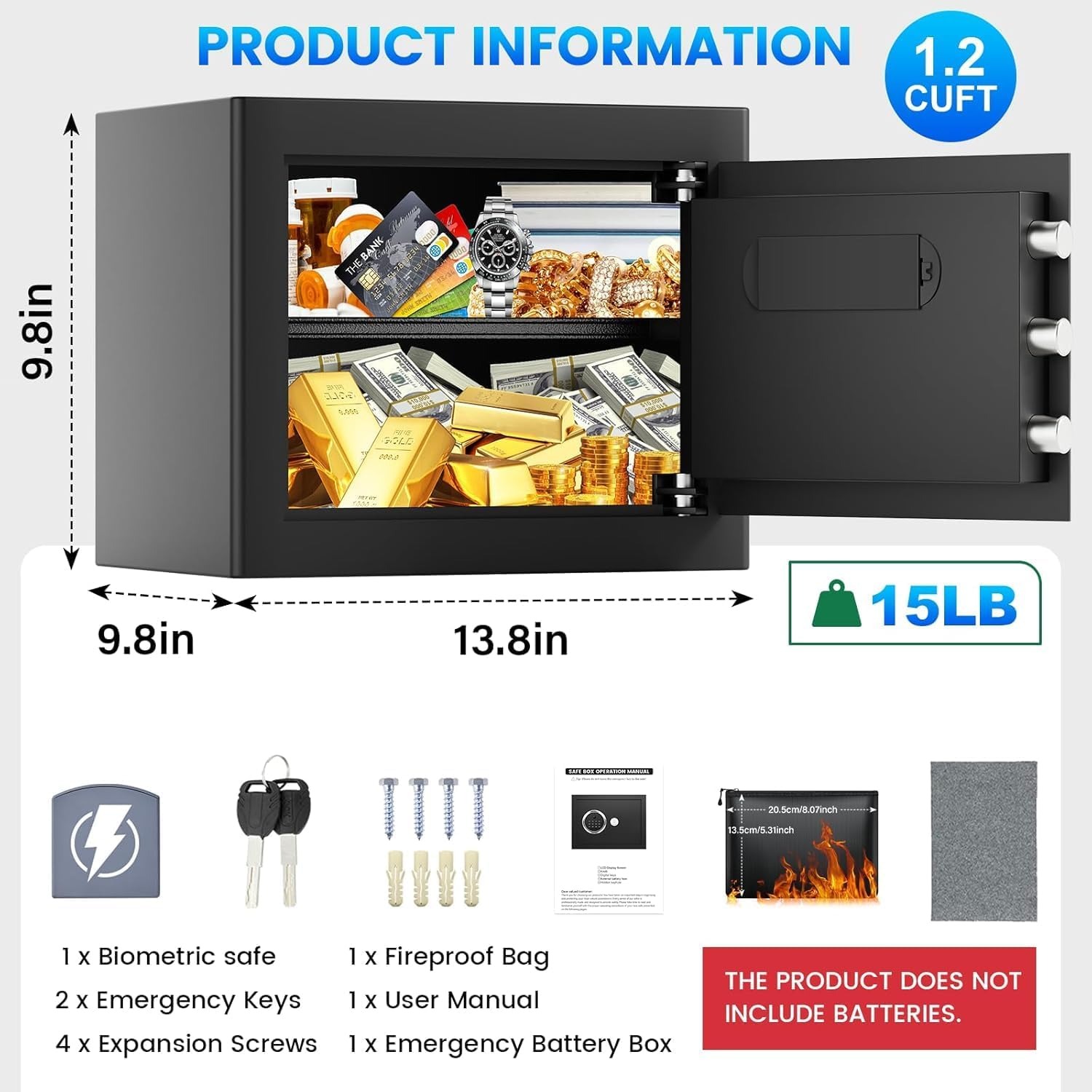
The listed measurements are 25 cm deep, 35 cm wide and 25 cm high. Use these figures to plan the space the safe will occupy. You also need room to open the door and use the keypad comfortably.
The product details list 20L capacity, although one passage in the maker description mentions 22L. Use the clearer 20L specification for comparison rather than relying on the larger figure.
Usable internal measurements are not verified in the maker's description. The walls, door and lock assembly take up space, so the listed outer size should not be treated as clear storage space. If flat A4 folders, rigid cases or a particular device must fit, ask for internal measurements before ordering.
Think about how you will arrange the interior
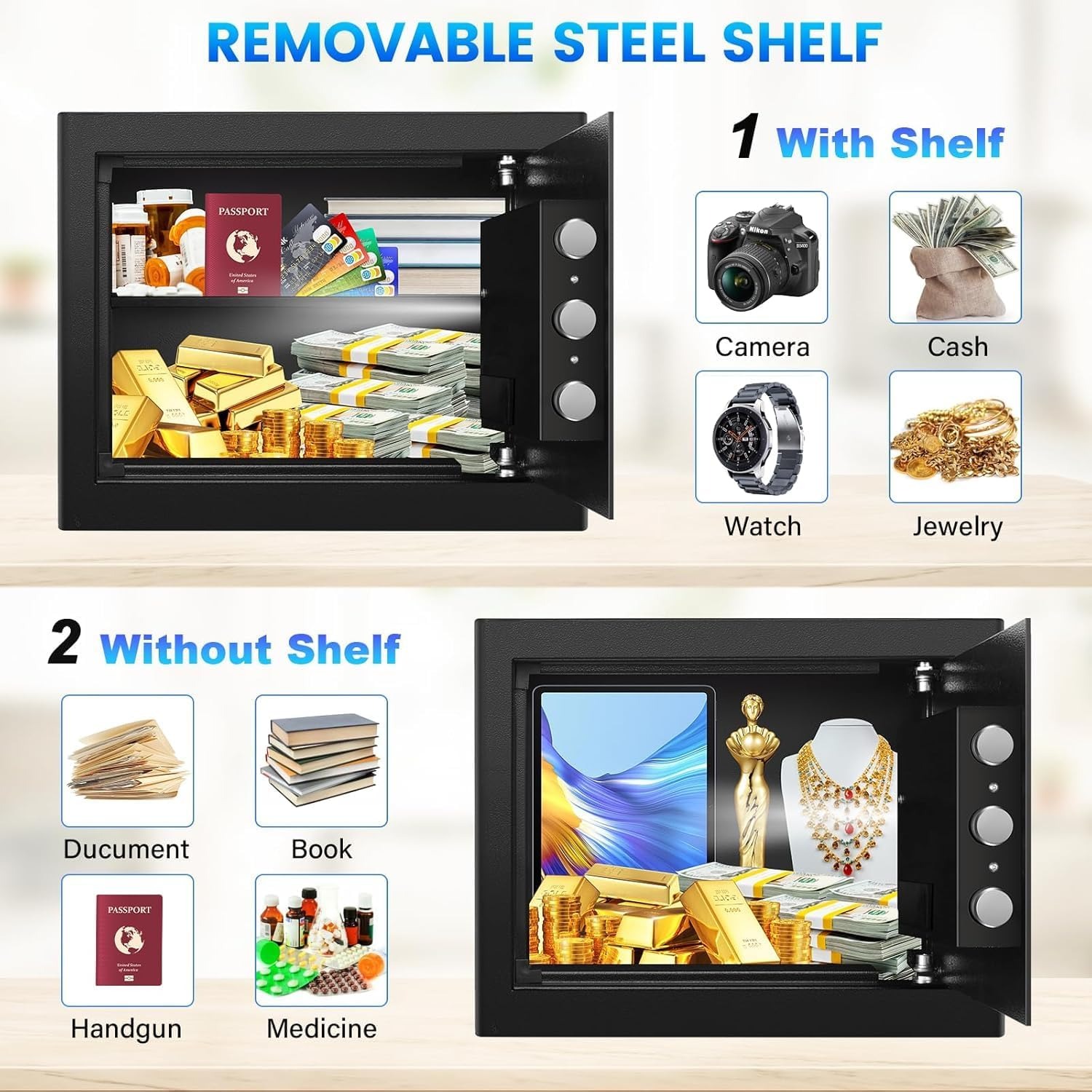
A safe with removable shelf storage can suit a changing mix of items. Keep the shelf in place to separate smaller belongings, or remove it when you need space for something taller. The maker does not state shelf adjustment positions or a weight limit.
The motion-sensor interior light is another practical feature. It helps you see contents in a dim cupboard or room without relying only on overhead lighting.
Even with a light, a simple layout helps. Keep frequently used belongings within easy reach and avoid piling hard objects against delicate pieces. Use suitable cases for jewellery and keep keys or loose metal items away from surfaces they could scratch.
Choose a sensible installation location
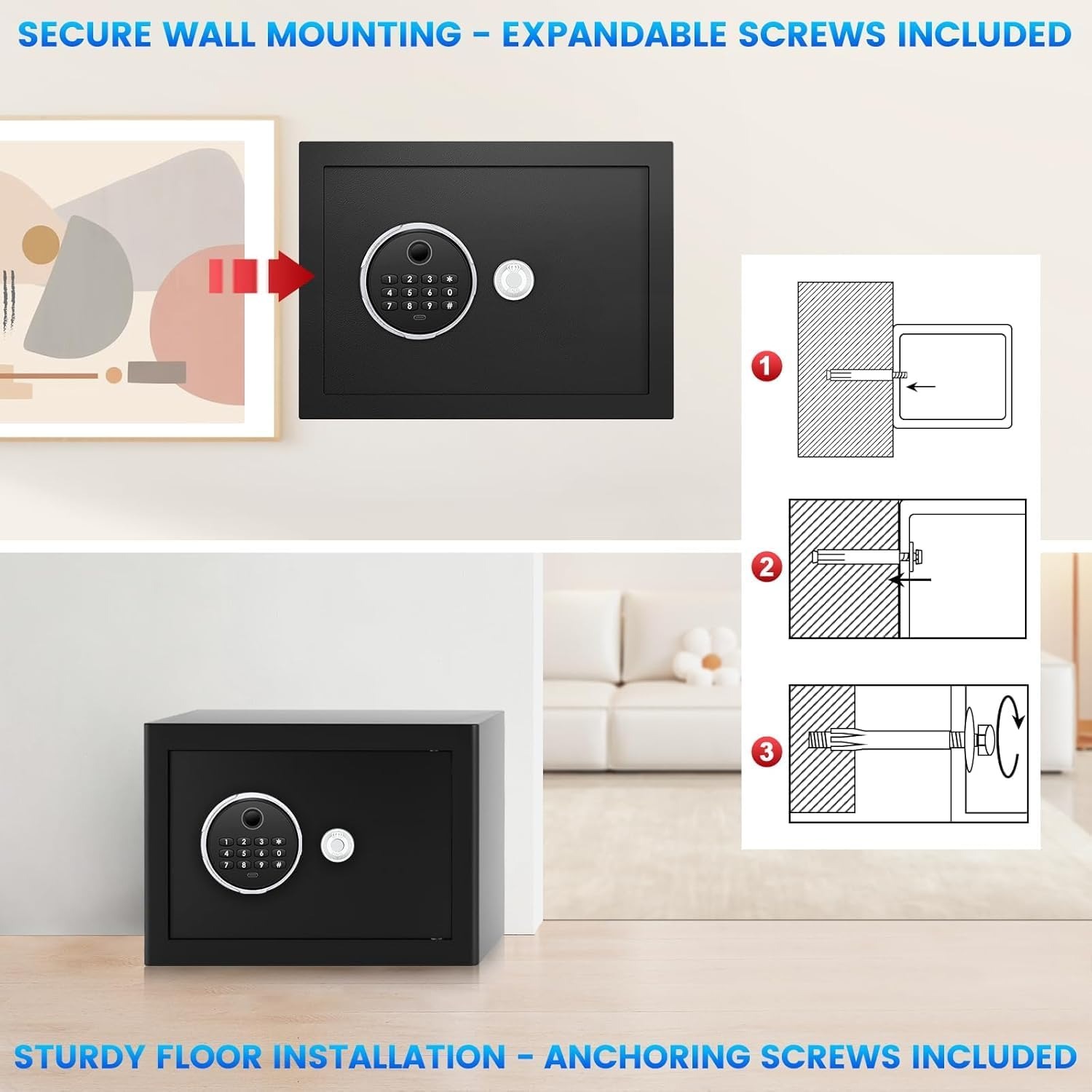
This safe supports wall or floor mounting and comes with four expansion bolts. Pre-drilled mounting holes are listed, but choosing the right location still needs care. A supplied bolt is not proof that every wall or floor can accept it.
Consider the building surface, available space and access to the door. Avoid choosing a tight spot based only on the closed-box measurements. You need to read the display, reach the fingerprint reader and use emergency access if required.
The safe weighs 7.7 kg before you add contents. Check that its support can take the total load. If you are unsure about the surface or the fixing method, ask a qualified installer rather than guessing.
Put construction claims in context
The product details describe an alloy steel body and three 20 mm live-locking bolts. These are useful construction facts, but they do not provide a tested burglary grade.
There is no stated body thickness, door thickness or independent resistance certification in the maker's description. For that reason, do not compare this small fingerprint safe with a certified high-security safe on appearance or bolt size alone.
Think of your purchase as one part of a wider storage plan. If an insurer requires a named standard, a cash rating or a specific installation method, get those details confirmed before buying. A general description of steel construction is not a substitute.
Know what the alarm can and cannot tell you
A fingerprint safe with alarm adds an alert feature to the storage box. Here, the alarm is listed as responding to three incorrect attempts or violent vibration.
That can be useful information when comparing models, but several details are missing. The maker does not state alarm volume, how long it sounds or whether it sends any remote notification. Do not assume it connects to a phone or a home alarm system.
An optional mute mode is also listed. Read the manual to learn which sounds it turns off. Quiet keypad use and alarm behaviour are separate questions, so confirm both if you plan to place the safe in a bedroom or shared office.
Plan for low batteries before they happen
Electronic access needs a backup plan. This model lists a low-battery indicator, a Type-C emergency power port and an external battery box. It also includes the two emergency keys.
Battery type, quantity and expected life are not specified. Check the manual before setup rather than buying batteries based on a similar-looking model. A Type-C port should not be taken as proof that the safe has a rechargeable internal battery.
Keep the keys and emergency power accessory somewhere secure and accessible outside the safe. Test the approved access methods during setup with the door open, following the manual. That is a better time to learn the process than after a power problem.
Be clear about fire protection
The safe unit is not rated as fireproof. That matters if your main goal is protecting original documents, cash or keepsakes from a house fire.
A separate money bag is included and described as fire-resistant. However, the maker gives no tested temperature, duration or certification for it. The presence of the bag does not give the safe itself a fire rating.
If fire protection is central to your needs, compare products with stated test standards and check what those tests cover. Paper and electronic storage media may need different protection. Choose based on a documented rating rather than the wording used for an included accessory.
Set it up for the people who will use it
Before using this as a shared household or biometric office safe, decide who should have access. Register only the fingerprints you intend to authorise and follow the manual for managing them.
Keep a clear plan for emergency keys. If one person handles all setup, make sure another authorised person knows where the instructions are and how backup access works.
For a gift, leave the personal setup to the recipient. Give them all the supplied parts, including both keys and the manual. They can then choose their own code, register their prints and select the installation location.
Keep care simple and regular
Use a soft, dry cloth for routine cleaning. Keep liquids away from the keypad, fingerprint sensor and other electronic parts. Avoid abrasive products that could damage surfaces.
Follow the manual for battery checks and replacement. Do not wait for an urgent need to discover that an access method no longer works. Check the mounting periodically as directed, especially if the safe sees frequent use.
Before ordering, also read our delivery and returns information. Product specifications do not establish a delivery date or return window. If the safe arrives and the fit is wrong, contact us and review the policy before drilling holes or mounting it.
The short version
This 20L biometric safe box offers fingerprint access, a digital keypad and emergency keys in a listed 25 × 35 × 25 cm format. A removable shelf, interior light and wall or floor mounting options add practical choices for everyday storage.
Choose it only after checking your items and installation space. If you need confirmed flat-document clearance, a fire rating or insurance approval, get those requirements settled first. The right safe is the one that fits both your belongings and the protection you actually need.